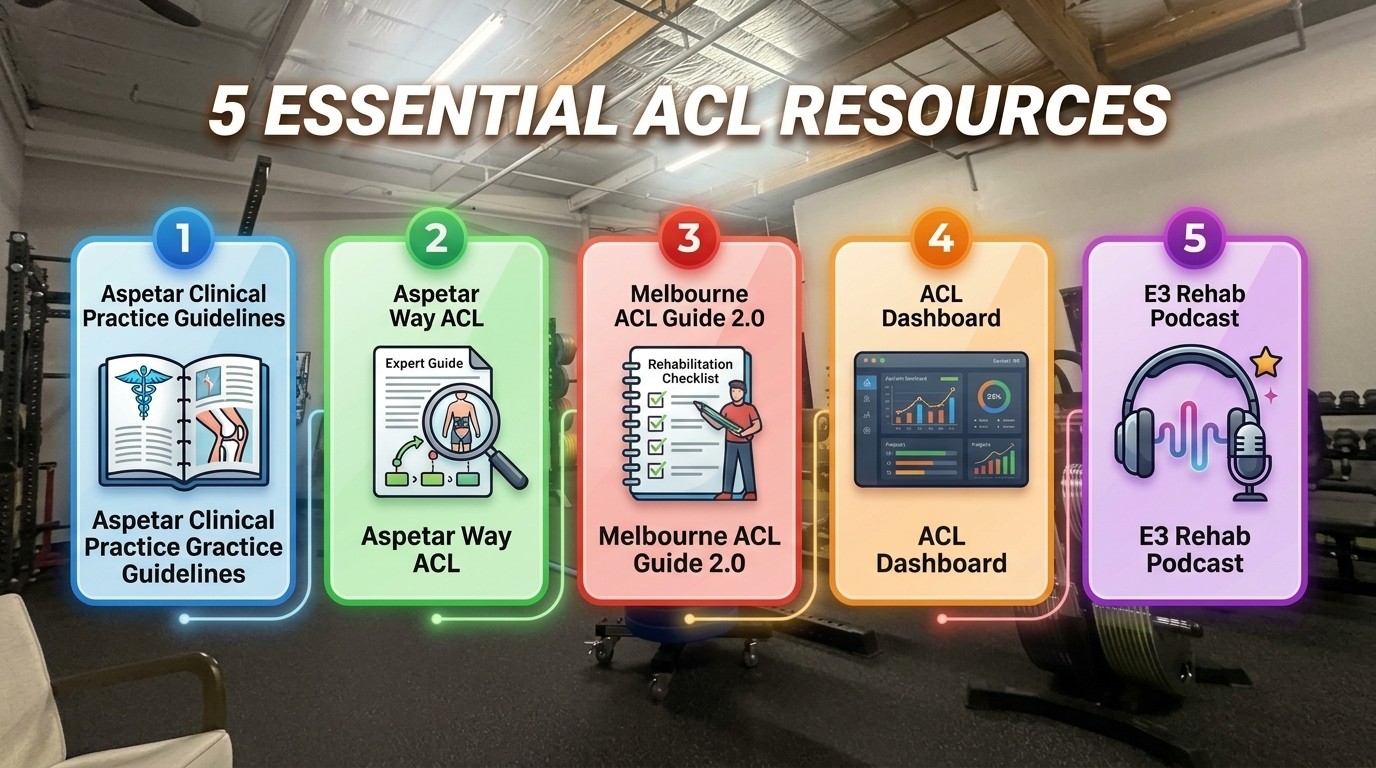

ACL Tear: Is Surgery Your Only Option, or Can Physical Therapy Alone Get You Back to Sport?
By
Dr. Mike Makher
Torn your ACL? Learn when physical therapy alone can work and when surgery is needed. Return-to-sport testing and ACL rehab in Hillsboro and Aloha, OR.
Disclaimer: This article is for educational purposes only. It should not be seen as medical advice. Every case and person is unique, so treatment and prevention should be customized by a licensed professional.
ACL Tear: Is Surgery Your Only Option, or Can Physical Therapy Alone Get You Back to Sport?
A note before you read: This article is for general education only. It is not medical advice and should not replace a visit with an orthopedic surgeon or evidence based physical therapist. Every knee and every person is different, so any decision about surgery or rehab should be made with a qualified provider who can examine you in person. The information below is based on published research studies, which are cited throughout and listed at the end.
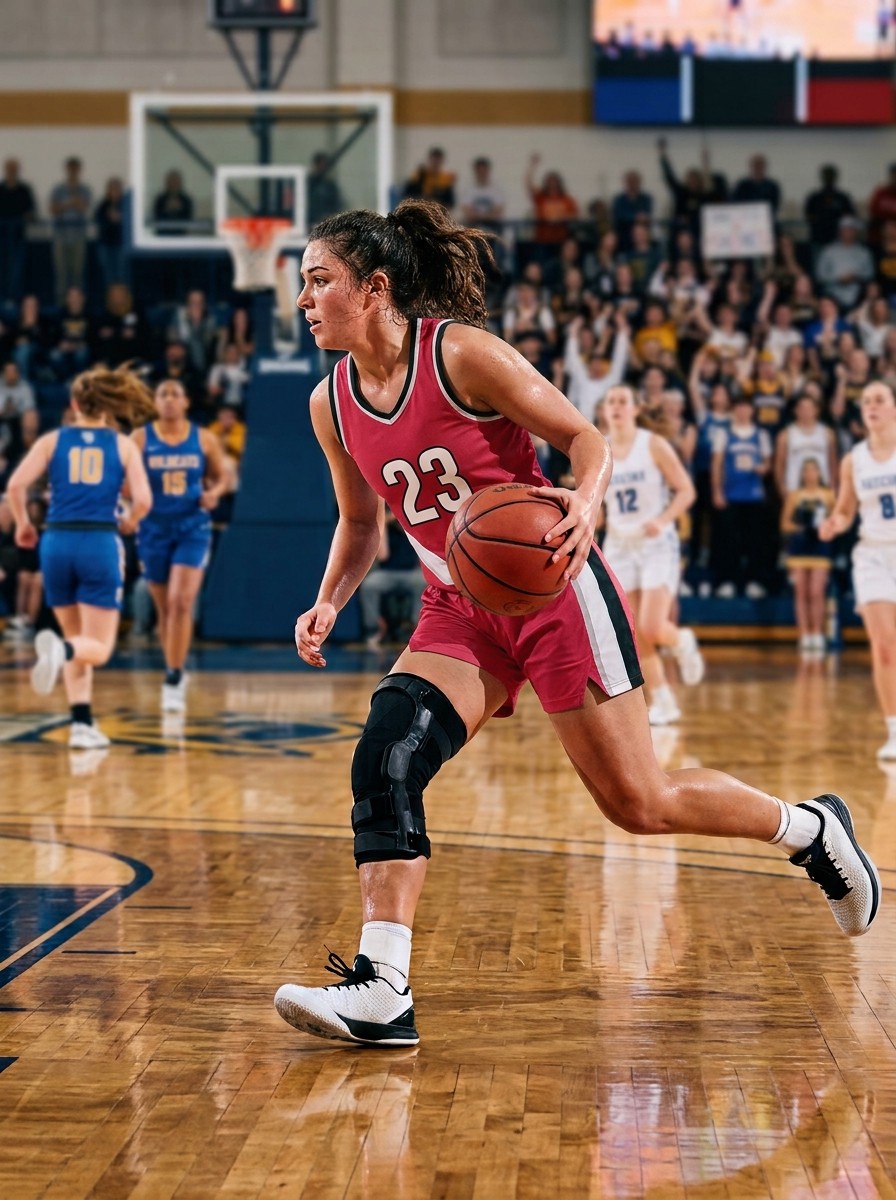
Quick answer: Not every ACL tear needs surgery. Research shows roughly a third of people can return to their prior activity level with focused rehab alone, a third can stay active at a lower level, and a third will need surgery. Screening tests, a short trial of "prehab," and a structured, criteria-based return-to-sport program (like the widely used Aspetar protocol) can help determine which path is right and confirm when a knee is truly ready for sport again.
If you or someone you love just tore their ACL, you have probably already heard one thing over and over: "You need surgery." Doctors say it. Friends who tore their ACL say it. Even the internet says it.
But here is something that might surprise you. Surgery is not the only path forward. For some people, skipping surgery and doing focused rehab works just as well, or even better, in the long run. The trick is figuring out who is a good fit for that path, and knowing exactly what "ready for sport" needs to look like no matter which path you take.
This article walks through what the research actually shows about non-surgical ACL care, who tends to do well without surgery, and what a real, test-based return-to-sport program looks like.
What Does the ACL Even Do?
The ACL is a ligament inside your knee. Think of it like a rope that keeps your shin bone from sliding too far forward under your thigh bone. It also helps your knee twist and turn the right way when you run, cut, or pivot.
When the ACL tears, the knee can feel wobbly or unstable, especially during sports that involve jumping, cutting, or quick turns.¹ That instability is the real problem doctors are trying to fix, not just the torn ligament itself.
Two Roads After a Tear: Surgery or Rehab
When someone tears their ACL, they usually have two choices.
The first choice is surgery, called ACL reconstruction. A surgeon rebuilds the ligament using a piece of tendon from somewhere else in the body, or from a donor. Then the person goes through months of rehab to get strong again.
The second choice is called non-operative management, or conservative management. This means skipping surgery and instead going through a focused rehab program to retrain the muscles and nerves around the knee to keep it stable on their own.
For years, many doctors leaned hard toward surgery for anyone who wanted to keep playing sports. But research going back decades tells a more complicated story.¹
The "Rule of Thirds"
Almost 40 years ago, researchers came up with something called the rule of thirds for ACL tears treated with rehab instead of surgery.¹ It goes like this:
About one third of people can go back to their old sports and activities without ever needing surgery. These people are called "copers."
About one third of people can still live a normal life and even do lighter activities, but they have to back off from tough, twisting sports. These are sometimes called "adapters."
About one third of people keep having their knee give out on them during daily life, and they end up needing surgery. These are called "noncopers."
That rule of thirds still holds up pretty well today.¹ It means a real chunk of people, roughly a third, can dodge surgery completely and do fine. The challenge has always been figuring out ahead of time who falls into which group.
Meet the "Copers"
A coper is someone whose knee stays stable even without an ACL, at least during normal activity and even some sports.¹ Their body has learned to protect the knee joint using muscle control and smart movement patterns, almost like a natural brace made of muscle instead of ligament.
Noncopers, on the other hand, keep feeling their knee buckle or give way, even during regular daily tasks like walking down stairs or turning quickly.¹ These are the folks who usually need surgery to get back to a stable, active life.
Studies have found real, measurable differences between copers and noncopers. Noncopers tend to have weaker thigh muscles, especially the quadriceps on the front of the thigh.¹ They also move differently, using a kind of "stiffening" strategy where they hold their knee stiffer than normal to make up for the missing ligament.¹ One study even used a balance machine and found that noncopers swayed more and had worse balance than copers, especially when standing on both feet.²
Copers, by comparison, tend to have movement patterns and balance that look a lot closer to someone with a totally healthy knee.²
How Do You Know If You're a Coper?
This is where physical therapists come in with something called a screening test. Researchers at the University of Delaware built one of the most well known versions of this test, and it looks at four things.¹
First, how many times has your knee given out or buckled since the injury? A good sign is one time or fewer.
Second, how far can you hop on the injured leg compared to the healthy leg, timed over a 6 meter hop? A good sign is scoring 80 percent or better compared to the healthy leg.
Third, how do you rate your own knee function on a questionnaire about daily activities? A good sign is scoring 80 percent or higher.
Fourth, how do you personally rate your overall knee function on a simple 0 to 100 scale? A good sign is 60 percent or higher.
If someone meets all four of these marks, they get labeled a "potential coper" and may be a good candidate to try rehab first, without surgery. If they miss even one of the four marks, they get labeled a "noncoper" and are usually steered toward surgery.
It is worth being honest here: this test is not perfect. One study out of Norway found that when doctors tried to use these same tests to predict who would truly turn out to be a coper a year later, the test was not much better than a coin flip.¹ So this screening is a helpful starting point and a piece of the puzzle, but it is not a crystal ball.
The Big Surprise: Rehab Alone Can Change Your Classification
Here is one of the most hopeful findings in all this research. Being a "noncoper" right after injury does not mean you are stuck that way forever.
A large study, called the Delaware-Oslo ACL Cohort study, followed 271 athletes after their ACL tear.³ Every single one of them did a 10 session strength and balance training program, called neuromuscular and strength training, over about five weeks, before deciding whether to have surgery.
The results were pretty amazing. Before this training program, more than half of the noncopers stayed noncopers. But after just those 10 sessions, almost half of the people who had been labeled noncopers turned into potential copers.³ Their knees became more stable, simply from doing focused strength and balance work.
And here is the part that really matters. Two years later, the people who became potential copers after this training did much better than people who stayed noncopers, no matter whether they eventually had surgery or not.³ In fact, potential copers who chose to skip surgery entirely did just as well, or slightly better, than potential copers who chose surgery.³
This tells us something important: a real chunk of people who look like bad candidates for skipping surgery right after their injury might become great candidates for skipping surgery after a short round of focused physical therapy. Doing that rehab first, before deciding on surgery, is sometimes called "prehab," and it seems to genuinely change outcomes for the better.³
What About Kids and Teens?
Younger athletes bring their own set of questions. A recent study looked at teenagers with partial ACL tears, meaning the ligament was stretched or partly torn but not completely snapped in two.⁴
Out of the kids treated without surgery at first, about one in four ended up progressing to a full tear within about a year of getting back to sports.⁴ That is a real risk, and it is worth talking about honestly with young athletes and their families. But it also means three out of four kids with a partial tear did fine without needing surgery, at least in terms of the ligament itself.
Interestingly, this study could not find any clear warning signs that predicted who would get worse. Things like body weight, which sport they played, or how long they wore a brace did not seem to make a difference.⁴ That means doctors cannot yet perfectly predict who is at risk, which makes honest conversations and careful monitoring especially important for young athletes.
Another review of research on young athletes pointed out that reconstruction is still usually recommended for teens who want to get back into high level, cutting and pivoting sports like soccer or basketball, mostly because their instability risk is higher and they have many years of sports still ahead of them.⁵ But that same review also said non-surgical rehab can be reasonable for lower demand young athletes or for partial tears with a stable knee, as long as the family understands the risks and stays involved in the decision.⁵
Fear of Reinjury Is a Real Thing Too
Something that does not get talked about enough is the mental side of ACL injuries. Researchers use a tool called the Tampa Scale of Kinesiophobia, which is really just a fancy way of measuring how afraid someone is of moving their body and getting hurt again.⁶
One study found that noncopers had noticeably higher fear scores before treatment compared to potential copers.⁶ That makes sense. If your knee keeps giving out on you, of course you are going to feel nervous about running or cutting.
The encouraging news is that this fear tends to drop a lot for noncopers once they get surgery and their knee becomes mechanically stable again.⁶ By about a year after surgery, fear scores in both groups, copers and noncopers, ended up looking pretty similar to fear scores of athletes who had already successfully returned to their sport.⁶
This matters because fear of reinjury is one of the biggest reasons athletes never make it back to their sport, even when their knee is physically ready. So part of a good rehab plan, no matter which path someone takes, should pay attention to confidence and fear, not just muscle strength.
Balance Doesn't Fully Come Back on Its Own
One more piece worth knowing: even copers are not perfectly back to normal. A balance study comparing copers, noncopers, and healthy people found that both copers and noncopers had worse balance in their injured leg compared to a healthy knee, especially while standing on just one leg.² Copers looked much closer to normal than noncopers, but they were not perfectly identical to people who never tore their ACL.²
This is a good reminder that "coper" does not mean "fully recovered and back to 100 percent automatically." It means the knee is stable enough to function well without surgery, but ongoing attention to balance and strength still matters.
The Gold Standard for Deciding "Ready" to Return to Sport
Whether someone chooses surgery or skips it, the real question everyone eventually asks is the same: "Am I ready to get back out there?"
A group of physical therapy experts working with Aspetar, a well known sports medicine hospital, put together detailed guidelines on this exact question.⁷ They looked at years of research to build a checklist that both surgical and rehab patients should be able to check off before returning to sport.
Here is what their return to sport criteria include:
No pain and no swelling in the knee.
Full range of motion in the knee, meaning it can bend and straighten all the way.
A stable knee, confirmed by a doctor's hands on exam.
Normal self reported knee function and normal psychological readiness, measured using standard questionnaires that ask how confident and comfortable someone feels about their knee.
Strong and balanced thigh muscles, tested with a machine that measures muscle force, called isokinetic testing.
Good jumping performance, measured by comparing how high someone can jump off each leg and how much force each leg produces.
Good running form, checked to make sure both legs are working evenly and safely during high speed running and quick direction changes.
Finishing a sport specific training program that gradually builds back up to full practice with the team.⁷
The Strength Numbers That Matter Most
Of everything on that list, muscle strength testing tends to get the most attention, and for good reason. Weak thigh muscles are one of the clearest red flags for reinjury.⁷
Here is the target that rehab specialists look for. The front thigh muscle, called the quadriceps, needs to produce at least 3.0 Newton meters of force for every kilogram of the person's body weight. Newton meters, or N times m, is just the unit used to measure rotational strength around the knee joint, similar to how a wrench measures turning force.
Since most people in the United States think in pounds instead of kilograms, here is a quick way to picture body weight in these numbers. One kilogram equals about 2.2 pounds.⁸ So someone who weighs 150 pounds weighs about 68 kilograms, and their quadriceps target would be about 68 times 3.0, or roughly 204 Newton meters of force.
On top of hitting that strength number, the injured leg also needs to reach at least 90 percent of the strength of the healthy leg. This comparison between legs is called a Limb Symmetry Index, or LSI for short. There is one important twist here: if the injured leg happens to be someone's dominant leg, meaning their naturally stronger leg, the bar gets raised. In that case, the injured leg needs to reach 100 percent symmetry compared to the other leg, not just 90 percent, since a dominant leg is usually expected to be a bit stronger to begin with.
The back thigh muscle group, called the hamstrings, has its own target. Hamstrings need to produce at least 1.5 Newton meters of force per kilogram of body weight, along with that same limb symmetry comparison between the injured and healthy leg.
These specific torque-to-bodyweight ratios for quadriceps and hamstring strength are used in clinical practice by Pain & Performance Coach.⁹
These numbers matter because strength alone does not guarantee a safe return, but weakness almost guarantees trouble. A knee that cannot produce enough force, or that leans heavily on the healthy leg to make up the difference, is much more likely to get hurt again during the twisting, landing, and cutting movements that sports demand.
A Full Return-to-Sport Roadmap: What the Aspetar ACL Protocol Adds
Strength numbers are only one piece of the puzzle. Aspetar Orthopaedic and Sports Medicine Hospital, the same group behind the return-to-sport checklist above, publishes a detailed, week-by-week ACL Rehabilitation Protocol that shows how all these pieces fit together on a timeline, from the day of surgery through full discharge back to sport.¹⁰ It is a useful roadmap for anyone, surgical or non-surgical, who wants to know what a well-run rehab program should actually look like.
Before surgery even happens. The protocol stresses that the knee should be calmed down before any operation. The pre-operative targets are full or near-full knee extension, more than 120 degrees of knee flexion, minimal swelling, no quadriceps lag, and a normal walking pattern.¹⁰ Rushing to surgery on a swollen, stiff knee raises the risk of long-term stiffness afterward.
A nine-part checklist, not just one number. Rather than judging a knee on strength alone, the Aspetar protocol tracks nine components side by side throughout rehab: knee range of motion, motor control, strength, explosiveness (jumping), reactive strength (fast, springy landings), running mechanics, change of direction ability, sport specific training, and cardiovascular conditioning.¹⁰ Each of these is introduced at a different point in recovery and layered on top of the last, so the athlete is never working on just one quality in isolation.
A five-stage testing timeline. Formal testing happens at roughly 6, 12, 18, 24, and 30 weeks after surgery, with each test building on the one before it.¹⁰ A few key milestones along that timeline:
By around 6 weeks: the knee should feel "happy," meaning good range of motion, minimal swelling, and returning quadriceps activation.
By around 12 weeks: the athlete typically starts running, once flexion, extension, swelling, and quad/hamstring strength benchmarks are met.
By around 18 weeks: sport specific training and change of direction drills can begin, but only once the athlete has a symmetrical single leg squat, clean cone hopping, neutral landing mechanics in multiple directions, quadriceps and hamstring strength at 80 % or better limb symmetry, and a running benchmark of about 16 km/h for 200 meters, repeated 8 times, without any knee reaction.¹⁰
At some point between 30 to 40 weeks: many athletes are ready for a full return to training and competition, assuming they hit the strength, jumping, and running thresholds described below.
What "ready" looks like in the numbers. The protocol sets specific, measurable thresholds for discharge, and it recognizes that the bar should be different depending on the athlete's goals:¹⁰
Competitive athletes returning to pivoting sports need quadriceps strength above roughly 300 percent of body weight and hamstring strength above roughly 175 percent of body weight, hip and ankle strength benchmarks, and 90 percent or better limb symmetry across strength, jumping, and landing tests.
Recreational athletes have a slightly lower, but still specific, bar: quadriceps strength above roughly 260 percent of body weight and hamstring strength above roughly 160 percent of body weight, with the same 90 percent limb symmetry standard on jumping and landing tests.
Both groups are also tested on double and single leg countermovement jumps, drop jump "reactive strength," running biomechanics on a treadmill, and change of direction mechanics at 90 degrees, with results compared to a healthy baseline or to sport-specific averages, not just to a generic pass/fail line.
The bigger takeaway from the Aspetar protocol is this: return to sport is not a single test on a single day. It is a gradual, tracked process, with formal check-ins roughly every six weeks, that intentionally builds strength, jump power, reactive landing ability, running mechanics, and sport-specific skill in a set order, so nothing gets rushed and nothing gets skipped.¹⁰ Whether an athlete has had ACL reconstruction or is working through non-surgical rehab as a coper, this same kind of structured, criteria-based approach, rather than simply counting weeks on a calendar, is what current research and clinical practice both point to as the safest way to get back in the game.
So, Surgery or No Surgery?
There is no single right answer here, and anyone who tells you otherwise is oversimplifying things. What the research actually supports is this: conservative, non-surgical management can absolutely be a smart, safe choice, but only for the right person.
Good candidates for skipping surgery tend to be people who pass a solid screening exam, who are willing to put in real effort during a structured strength and balance program before making a final decision, and who do not have other serious damage in the knee, like a torn meniscus, alongside the ACL tear.¹ ³ People who are less demanding on their knee day to day, or who are not chasing high level cutting and pivoting sports, often do especially well without surgery.
People who tend to do better with surgery include those who keep failing screening tests even after a good round of rehab, competitive athletes heading back into serious cutting and pivoting sports, and anyone whose knee keeps buckling during normal daily life, since that kind of ongoing instability raises the risk of further damage inside the joint over time.⁵
The most important step, no matter which path feels right, is working closely with a physical therapist or sports medicine doctor who can run these screening tests, guide a real strength and balance program, and track progress using clear, test-based milestones like the ones outlined above. ACL recovery is not one size fits all, and the good news is that today's research finally gives us real tools to figure out which path fits which person, and to know for sure when a knee is truly ready to go back to sport.
References
Kaplan Y. Identifying individuals with an anterior cruciate ligament-deficient knee as copers and noncopers: a narrative literature review. J Orthop Sports Phys Ther. 2011;41(10):758-766.
Soltani N, Rahimi A, Naimi SS, Khademi KK, Saeedi H. Studying the balance of the coper and non-coper ACL-deficient knee subjects. Asian J Sports Med. 2014;5(2):91-98.
Thoma LM, Grindem H, Logerstedt D, Axe M, Engebretsen L, Risberg MA, Snyder-Mackler L. Coper classification early after ACL rupture changes with progressive neuromuscular and strength training and is associated with two-year success: the Delaware-Oslo ACL Cohort study. Am J Sports Med. 2019;47(4):807-814.
Hannon MM, Chang E, Sullivan N, Miller PE, Christino MA, Kocher MS, Meehan WP III. Outcomes of initial nonoperative management of partial anterior cruciate ligament tears in pediatric patient. J Pediatr Orthop Soc N Am. 2026;15:100330.
Mosleh AFG. Current management approaches for anterior cruciate ligament tears in young athletes. Int J Res Orthop. 2025;11(6):1606-1610.
Hartigan EH, Lynch AD, Logerstedt DS, Chmielewski TL, Snyder-Mackler L. Kinesiophobia after anterior cruciate ligament rupture and reconstruction: noncopers versus potential copers. J Orthop Sports Phys Ther. 2013;43(11):821-832.
Kotsifaki R, Korakakis V, King E, Barbosa O, Maree D, Pantouveris M, Bjerregaard A, Luomajoki J, Wilhelmsen J, Whiteley R. Aspetar clinical practice guideline on rehabilitation after anterior cruciate ligament reconstruction. Br J Sports Med. 2023;57(9):500-514.
National Institute of Standards and Technology. The International System of Units (SI). US Department of Commerce; kilogram to pound conversion (1 kg ≈ 2.2046 lb).
Pain & Performance Coach. Quadriceps and hamstring torque-to-bodyweight strength ratios used in ACL return-to-sport criteria.
Aspetar Orthopaedic and Sports Medicine Hospital. Aspetar ACL Rehabilitation Protocol. 2023-24 ed. Doha, Qatar: Aspetar; 2023-2024.
Don’t Miss Out
Join our newsletter to get latest research insights.
References
Kaplan Y. Identifying individuals with an anterior cruciate ligament-deficient knee as copers and noncopers: a narrative literature review. J Orthop Sports Phys Ther. 2011;41(10):758-766. Soltani N, Rahimi A, Naimi SS, Khademi KK, Saeedi H. Studying the balance of the coper and non-coper ACL-deficient knee subjects. Asian J Sports Med. 2014;5(2):91-98. Thoma LM, Grindem H, Logerstedt D, Axe M, Engebretsen L, Risberg MA, Snyder-Mackler L. Coper classification early after ACL rupture changes with progressive neuromuscular and strength training and is associated with two-year success: the Delaware-Oslo ACL Cohort study. Am J Sports Med. 2019;47(4):807-814. Hannon MM, Chang E, Sullivan N, Miller PE, Christino MA, Kocher MS, Meehan WP III. Outcomes of initial nonoperative management of partial anterior cruciate ligament tears in pediatric patient. J Pediatr Orthop Soc N Am. 2026;15:100330. Mosleh AFG. Current management approaches for anterior cruciate ligament tears in young athletes. Int J Res Orthop. 2025;11(6):1606-1610. Hartigan EH, Lynch AD, Logerstedt DS, Chmielewski TL, Snyder-Mackler L. Kinesiophobia after anterior cruciate ligament rupture and reconstruction: noncopers versus potential copers. J Orthop Sports Phys Ther. 2013;43(11):821-832. Kotsifaki R, Korakakis V, King E, Barbosa O, Maree D, Pantouveris M, Bjerregaard A, Luomajoki J, Wilhelmsen J, Whiteley R. Aspetar clinical practice guideline on rehabilitation after anterior cruciate ligament reconstruction. Br J Sports Med. 2023;57(9):500-514. National Institute of Standards and Technology. The International System of Units (SI). US Department of Commerce; kilogram to pound conversion (1 kg ≈ 2.2046 lb). Pain & Performance Coach. Quadriceps and hamstring torque-to-bodyweight strength ratios used in ACL return-to-sport criteria. Aspetar Orthopaedic and Sports Medicine Hospital. Aspetar ACL Rehabilitation Protocol. 2023-24 ed. Doha, Qatar: Aspetar; 2023-2024.
Torn your ACL? Learn when physical therapy alone can work and when surgery is needed. Return-to-sport testing and ACL rehab in Hillsboro and Aloha, OR.