

ACL Surgery in Hillsboro, OR: Getting Back to Sport the Smart Way
By
Dr. Mike Makher
Tore your ACL in Hillsboro, Washington County, or Portland? Learn what top surgeons and American Academy of Orthopaedic Surgeons guidelines say about ACL surgery, graft choice, rehab timing, and safe return to sport.
Disclaimer: This article is for educational purposes only. It should not be seen as medical advice. Every case and person is unique, so treatment and prevention should be customized by a licensed professional.
Getting Back To Sport The Smart Way After ACL Injury
If you live in Hillsboro, Oregon, and you tore your ACL, life probably feels sideways right now.
Sports stop fast when your knee gives out. Soccer, basketball, football, skiing, even weekend pickup games at the park. One bad move and boom, your knee swells and will not trust you anymore.
This article is for people in Hillsboro who want to get back to sport, not just walk around okay.
We are talking about real sport. Cutting. Jumping. Running hard.
Everything here comes from top level research including from the American Academy of Orthopaedic Surgeons (AAOS) clinical guidelines, published research from elite sports hospitals, and the newest science review on ACL surgery and rehab. We're just on what we can say right now works and why.
What Does The ACL Actually Do
Your ACL is like a rope inside your knee.
Its job is to stop your shin bone from sliding too far forward and spinning too much.
When it tears, your knee may feel loose and/or buckle. It may feel okay walking straight but scary when you cut or turn.
Most ACL tears happen without contact, during fast moves like cutting, landing, or pivoting. Unfortunately that's just how the injury tends to happen.
Do You Always Need ACL Surgery?
Short answer: no, not everyone.
Long answer: it depends on you, your sport, and how much knee twist your life needs.
The best sports surgeons always make this fact very clear. There is no one size fits all ACL care. Some people do well without surgery. Some fail badly without it.
Who Might Skip Surgery
Some people can rehab and do fine if:
They do not play cutting sports
They are older
Their knee feels stable
They are okay changing activity
Research shows patient reported scores can look the same with or without surgery for some groups.
Who Usually Needs Surgery
If you are:
Under 25
Playing soccer, basketball, football, lacrosse, skiing, or similar
Feeling knee giving way
Wanting full return to sport
Then surgery is usually the better move.
The AAOS guidelines support ACL reconstruction for athletes who want pivot sports and still have knee looseness after rehab.
Why Young Athletes Are a Special Problem
This is where the most well informed surgeons will become passionate in conversation on this topic: young athletes have much higher failure rates after ACL injury.
Not just the surgical knee, but the other knee too.
Studies show up to 20 to 30 percent of young athletes tear another ACL within a few years. That is brutal since one major injury can steal one season but two injuries can close a career.
Modern ACL surgery is not just about replacing the ligament; it is about lowering re-injury risk.
ACL Repair vs ACL Reconstruction
You may hear about ACL repair. It might sound nice. Just "fix the old ligament and move on".
The problem is failure: large reviews show ACL reconstruction has much lower failure than repair, especially in young and active people.
Failure rates are far higher with repair, even when patient reported outcome scores look the same.
That is why the AAOS now clearly recommends reconstruction over repair when surgery is needed.
Graft Choice Matters More Than You Think
When you get ACL surgery, the surgeon uses a graft.
Autograft Beats Allograft
The AAOS is clear here: using your own tissue beats donor tissue for young and active people. It leads to lower failure rate and better overall outcomes.
This is based on strong evidence, not just opinion.
Common Graft Types
Patellar tendon
Strong. Lower failure rate. More kneeling pain.Hamstring tendon
Less kneeling pain. Faster recovery of quadriceps strength. Slightly higher failure rate in younger athletes.Quadriceps tendon
Rapidly growing in use. Big graft. Good option.
There is no perfect graft. The choice should match your body and sport. Talk to your orthopedic surgeon which option best suits you.
Why Some Surgeons Add Extra Stability
There was a great point brought up Dr. Getgood of Aspetar Orthopaedic and Sports Medicine Hospital in a lecture he made last February.
Some young athletes are high risk. They twist hard, play aggressive sports, and just have certain complex movement patterns.
For these athletes, adding a lateral extra articular tenodesis, also called LET, lowers re-tear risk.
Studies show this extra "strap" on the outside of the knee can reduce failure without hurting function.
This is not for everyone, just people at higher risk of re-injury.
Again modern ACL surgery is about matching the surgery to the person, not doing the same thing for everyone.
Surgery Is Only Step One
This part matters more than most people think, you don't recovery just from surgery and ACL rehab has changed a lot!
Old rehab was slow, stiff, and time based. Modern rehab is criteria based and highly individualized.
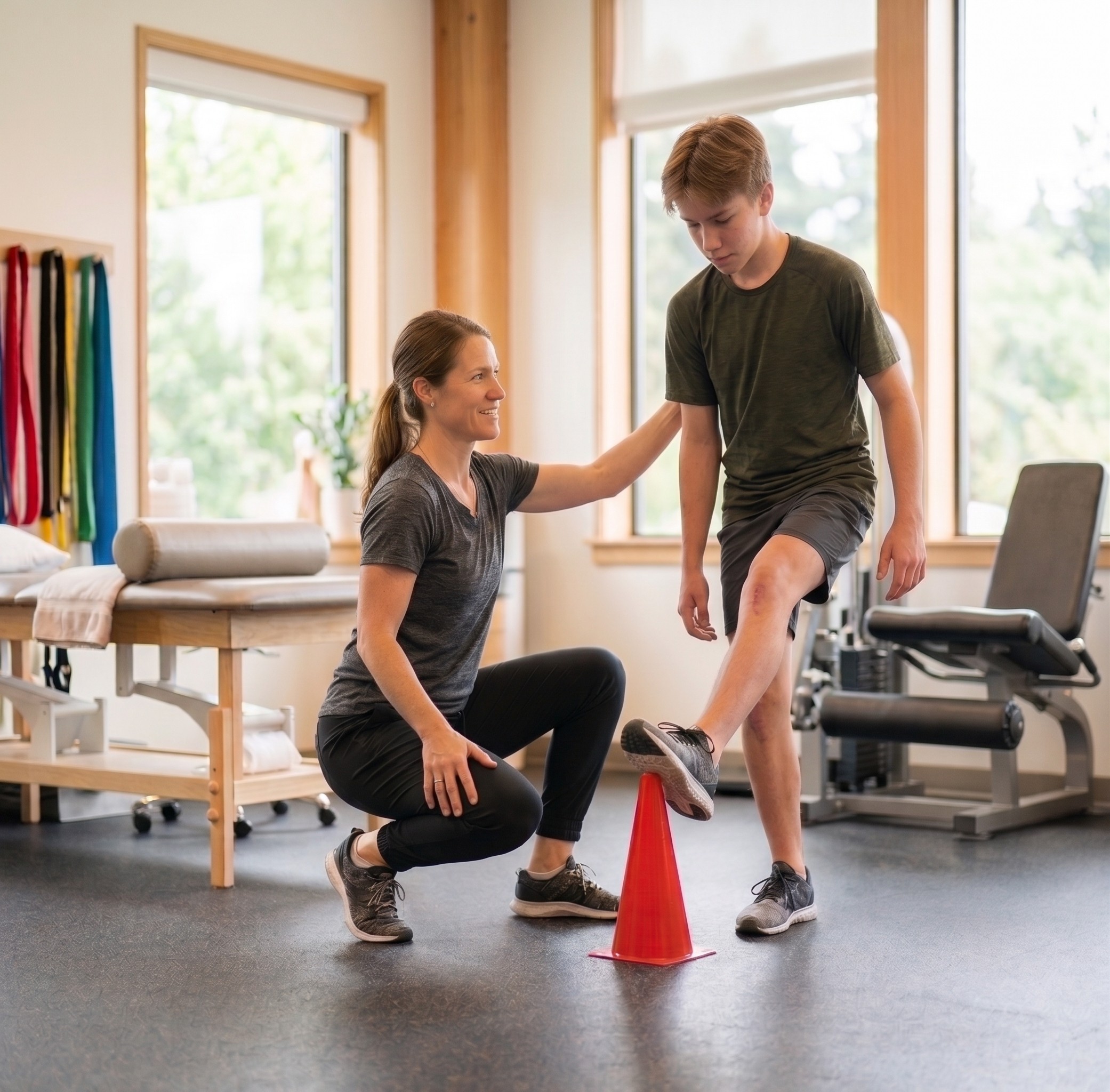
Which highlights that finding the right sports physical therapy clinic is extremely important for the injured athlete to recover as optimally as possible.
Time Alone Does Not Heal the ACL
You will hear people say, wait six months (or nine months) and you are good.
That is unfortunately completely misleading advice.
The graft goes through a long healing process called ligamentization and it keeps changing for over a year. That means making up timelines is a risky venture especially after such a major injury.
Returning too early is a big reason for re-injury especially over time (year two in the sport is where we often see a lot of subsequent injuries in the data).
It is true every month you delay return to sport up to nine months lowers relative re-injury risk by about 50 percent. Still nine months is not a guaranteed target and while many clinicians will cite it as the gold standard number, it actually is just a recommended minimum.
Return to Sport Should Be Earned
Modern guidelines say return to sport should not be based on the calendar.
It should be based on:
Strength symmetry (90% if it's the non-dominant limb that was injured and 100% if it was the dominant limb)
Reaching torque minimums (3.0 Nm/kg or roughly 1 lb per 1 lb of body weight as the minimum)
Vertical and horizontal jump testing
Change of direction symmetry
Movement quality
Confidence
Yes the AAOS recommends at least nine months before return to sport but they also recommend passing testing before full return. Aspetar has actually published a guideline and multiple articles highlighting clear examples of the testing that should be done and yet most physical therapy clinics simply can't accomplish it with their limited resources.
Unfortunately since only well equipped clinics with adequately trained sports physical therapists can properly administer the formal Aspetar process (due to the fact it requires rigorous objective testing based on dynamometers, force plates, timing gates, and AI based video analysis) only clinics like Pain & Performance Coach can deliver in the Hillsboro area.
Prehab Is Not Optional Anymore
Prehab, a term growing in popularity, simply means rehab before surgery. This involves clearing swelling, restoring motion, and building strength pre-surgery which often leads to better outcomes after surgery.
This is critical because people who go into surgery strong tend to get back to being strong more quickly and those who are weak prior to surgery tend to stay weak.
We can actually confirm this is well supported in the scientific literature.
New Rehab Tools That Actually Help
Blood Flow Restriction Training
This lets you build muscle with low loads. Essentially a tourniquet is used to create more intense demands on the limb by partially restricting blood flow out of the limb (the process is kind of like having a specialized blood pressure cuff on your limb) to make up for the fact the arm/leg can't tolerate heavy loads. This is a well researched approach which has been popularized by the Owens Recovery Science group that was born out of a specialized division of the US Military's Center for Intrepid rehab facility.
This is an extremely useful approach especially early after surgery when heavy lifting is unsafe.
Some are a bit overrated
People will mention anti-gravity treadmills that allow early walking and running with less body weight. However even the former VP of Sports Medicine and Performance of the New York Knicks and former PT for the Portland Trailblazers Dr.Jesse "Jess" Ellis openly stated that a pool can easily be used to replace one of these fancy treadmills (so yes, even the Shute Park Aquatic & Recreation center's shallow pool is a potential option to help those in Hillsboro, OR do their home routine after this type of injury).
I've even spoken to multiple elite facility owners who simply regret purchasing these large devices due to their limited benefit.
The Burning Truth About ACL Surgery in Hillsboro, OR
Here is the big takeaway you should get from this article:
ACL surgery works best when:
The right people get surgery
The right graft for the person is chosen
Extra stability is added when risk is high
Rehab is extensive, smart, and thoroughly tested
Return to sport is earned, not rushed
Elite sports surgeons, like Dr.Getgood, make this very clear. The AAOS, Aspetar, and modern research also agree with the bullet points above.
ACL surgery is no longer just fixing a ligament, but also managing risk over years.
If you want to get back to sport in Hillsboro (or any other part of Washington County/West Portland such as Aloha, Beaverton, Cornelius, Forest Grove, North Plains, etc.) and stay there you need to do more than just have surgery.
Who do we recommend if you want to have an ACL reconstruction in the metro area?
Currently for ACL Reconstructions we recommend Dr.Nancy Yen-Shipley at Form & Function Orthopedics most often as our top option for patients asking for orthopedic specialists for this procedure. We value her expertise and her team's compassionate approach (including her PA Isaac Obeng) to patients.
Our backup option for adults is Dr.Robert Sandmeier at the Portland Clinic and we love his support team including his PA Michael Cunningham. For many of our pediatric patients (especially those under 14 years of age) we often refer to Dr.Jeana Summers at Ortho+Fracture clinic as she's both generally accessible and an expert on skeletally immature children dealing with injuries.
Final Thought
Your knee does not care how badly you want to play, it only knows when it is ready.
The smart process is often the one that lets you play next year and the year after rather than a rushed approach that only pushes to get you back to the field or court as soon as possible. This isn't just about injury risk but also performance optimization.
That's why we strongly recommend you reach out to us by calling Pain & Performance Coach at 971-364-0909 or filling out our contact form for us to call you. We can provide anything from a referral to the best surgeons in the area, how to recover from an ACL tear without surgery, or even an explanation of the latest science for the post surgical recovery process.
Don’t Miss Out
Join our newsletter to get latest research insights.
References
Brophy RH, Lowry KJ. American Academy of Orthopaedic Surgeons Clinical Practice Guideline Summary: Management of Anterior Cruciate Ligament Injuries. J Am Acad Orthop Surg. 2023;31(11):531-537. doi:10.5435/JAAOS-D-22-01020; Kotsifaki R, Korakakis V, King E, et al. Aspetar clinical practice guideline on rehabilitation after anterior cruciate ligament reconstruction. Br J Sports Med. 2023;57(9):500-514. doi:10.1136/bjsports-2022-106158; Schoepp C, Tennler J, Praetorius A, Dudda M, Raeder C. From Past to Future: Emergent Concepts of Anterior Cruciate Ligament Surgery and Rehabilitation. J Clin Med. 2025;14(19):6964. Published 2025 Oct 1. doi:10.3390/jcm14196964; Yang YT, Cai ZJ, He M, et al. All-Inside Anterior Cruciate Ligament Reconstruction: A Review of Advance and Trends. Front Biosci (Landmark Ed). 2022;27(3):91. doi:10.31083/j.fbl2703091
Tore your ACL in Hillsboro, Washington County, or Portland? Learn what top surgeons and American Academy of Orthopaedic Surgeons guidelines say about ACL surgery, graft choice, rehab timing, and safe return to sport.
What New Knee Research Means for Patients in Hillsboro, Beaverton, Aloha, and Nearby Towns
Sep 6, 2026
By
Dr. Mike Makher

ACL Tear: Is Surgery Your Only Option, or Can Physical Therapy Alone Get You Back to Sport?
Aug 23, 2026
By
Dr. Mike Makher

ACL Recovery Guide for Hillsboro, OR
Aug 13, 2026
By
Dr. Mike Makher