Why Your Split Squat May Not Be Helping Your ACL Recovery (And What to Do Instead) in Hillsboro, OR
By
Dr. Mike Makher
New research shows that people recovering from ACL surgery often cheat the split squat without realizing it, loading their hips instead of their quadriceps. Learn what this means for your recovery and how the team of physical therapists at Pain & Performance Coach LLC (physical therapists near Beaverton, Aloha, and Hillsboro, OR) can help.
Disclaimer: This article is for educational purposes only. It should not be seen as medical advice. Every case and person is unique, so treatment and prevention should be customized by a licensed professional.
Why Your Split Squat May Not Be Helping Your ACL Recovery (And What to Do Instead)
If you or someone you know has had ACL surgery, you already know how long and hard the road back to full activity can be. You go to physical therapy. You do your exercises. You trust that the movements your care team gives you are building your knee back up.
But what if one of the most popular exercises used during ACL recovery, the rear foot elevated split squat, is not doing what everyone thought it was doing?
New research published in Medicine and Science in Sports and Exercise in 2026 says exactly that. And for patients dealing with knee pain after ACL reconstruction in communities like Hillsboro, OR, Beaverton, OR, Aloha, OR, and Cornelius, OR, this study has real and important lessons.
What Is the Rear Foot Elevated Split Squat?
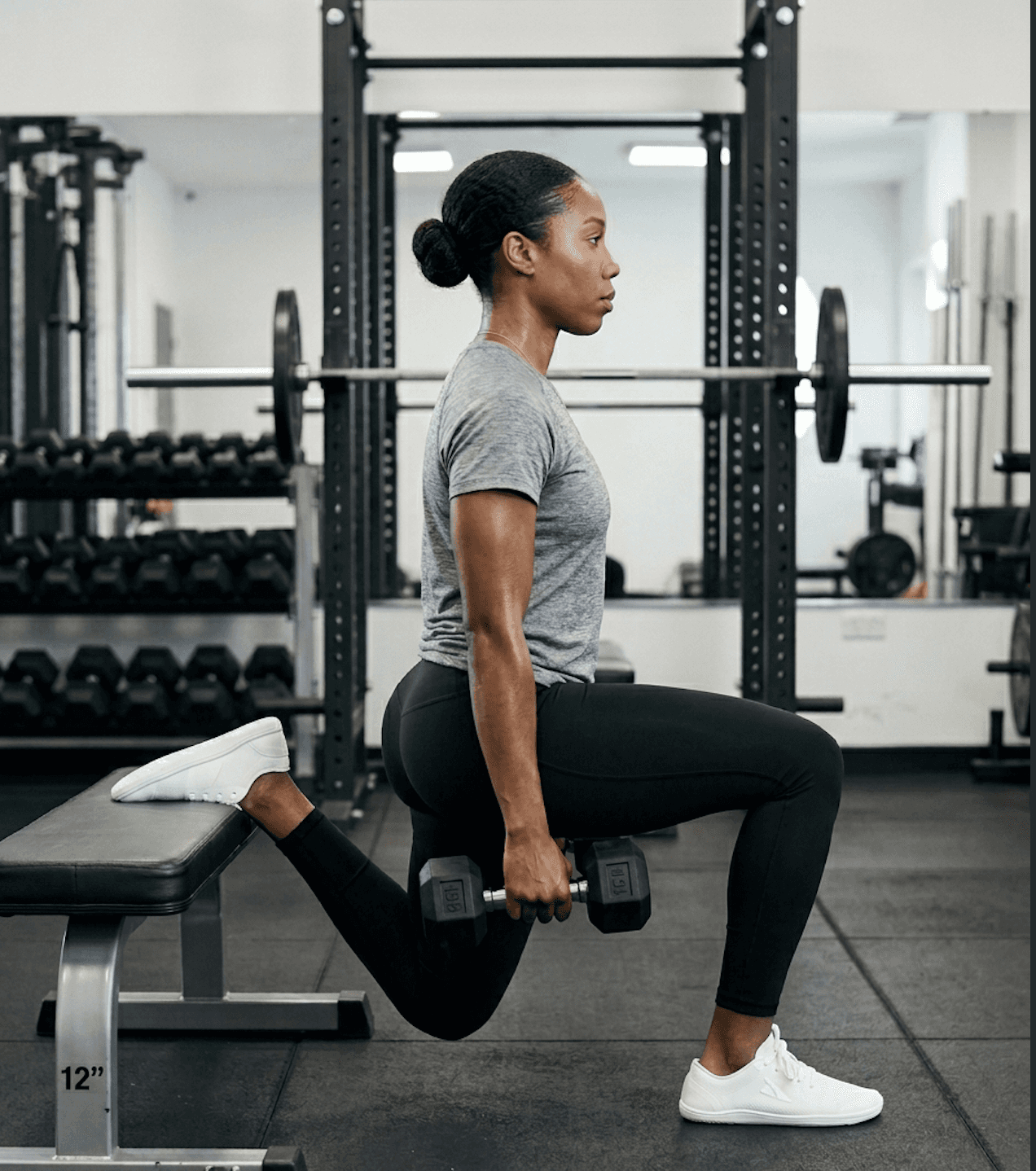
The rear foot elevated split squat, often called the RFESS or Bulgarian split squat, is a strength exercise where you stand with one foot forward on the floor and the other foot resting on a bench or pad behind you. You then lower your body down by bending the front knee, like a lunge, and come back up.
Physical therapists and strength coaches have used this exercise for years because it seems to target just one leg at a time. Since people recovering from ACL surgery need to build strength back in their operated leg, an exercise that focuses on one leg sounds like a great idea. It also feels more stable than a true single leg squat because the back foot gives you some extra balance.
For these reasons, the RFESS has become a go-to exercise in ACL rehab programs all over the country, including in clinics serving Hillsboro, OR, Aloha, OR, and surrounding areas.
What Did the Study Actually Look At?
Researcher Dr. Megan Graham, PhD, DPT and her team at the University of Kentucky wanted to know whether the RFESS was truly loading the surgical leg in the way physical therapists hoped. Specifically, they wanted to know: is the knee working hard during this exercise, or is the body finding sneaky ways to avoid putting stress on the knee?
They studied 25 people who were about four months out from ACL surgery. All of them had the same type of graft, a bone-patellar tendon-bone autograft, which is one of the most common types of ACL reconstruction used in young athletes.
Each participant did the RFESS on both legs while scientists measured their movement in detail using 3D cameras and special force plates in the floor. This gave the research team a precise picture of exactly how much work each joint, specifically the hip, the knee, and the ankle joints, was doing on each side.
What Did They Find? The Body Is Smarter Than the Exercise
The results were shocking; when people put their surgical leg in front, their bodies did something clever but unhelpful for recovery: the person would unintentionally avoid putting stress on the knee.
The researchers found two types of avoidance strategies happening at the same time.
The first type is called interlimb compensation. This means people were shifting their body weight backward onto the rear leg so the front surgical leg did not have to carry as much load. In healthy people doing this exercise, the front leg carries about 85% of the body's weight. In the study group, the surgical leg was carrying only about 70% of the weight. That missing 15% was going onto the back leg resting on the pad.
The second type is called intralimb compensation. Even within the front leg itself, the knee was not pulling its weight. Instead of the knee muscles doing most of the work, the hip muscles took over. On the surgical side, the hip was doing about 58% of the total work, while the knee was doing only about 18%. On the healthy side, the knee was doing about 30% of the work: still not huge, but nearly double what the surgical side managed.
In plain terms: most of the hard work during this exercise was going to the hip and to the back leg rather than to the surgical knee that needed strengthening.
Why Does the Body Do This?
The body is a very good problem solver. After ACL surgery, the knee is often weak, sometimes painful, and generally just does not feel right. The brain learns quickly that driving the knee forward into a deep bend is uncomfortable or scary, so it finds other ways to complete the movement.
In an interview about the study, lead researcher Megan Graham explained it simply: patients would often say they did not really feel the exercise in their quad. And when weight was added over time, their shin would become more and more vertical which is a clear sign that the knee was being taken out of the equation.
A vertical shin angle means the knee is not traveling forward over the toes. When the knee stays back, the distance between the ground reaction force and the knee joint shrinks. When that distance shrinks, the quad muscle has to do far less work. The hip takes over instead.
What About Trunk Position?
Here is one of the most surprising findings from the study, and one that should change how therapists coach this exercise.
Many physical therapists, strength coaches, and personal trainers are taught to cue patients to keep a tall, upright chest during the split squat. The logic comes from bilateral squats, where keeping the chest up tends to shift more work to the knees.
But in this study, an upright chest during the RFESS actually made things worse, not better. People were already leaning slightly more upright on their surgical side, and that upright trunk was connected to more weight going onto the back leg…not onto the surgical knee.
The reason makes sense when you think about it. During a regular squat, you cannot shift your weight backward without losing your balance. But in the RFESS, that back foot on the pad acts like a kickstand. It lets you lean back without falling. And when you lean back, your chest naturally becomes more upright. So an upright chest in the RFESS can actually be a sign that someone is offloading the exercise, not loading the knee better.
Importantly, trunk angle did not change how much the knee worked within the front leg. Whether patients had a more forward-leaning trunk or a more upright one, surprisingly the knee's share of the work stayed about the same. The trunk angle only changed how much total weight the front leg carried.
This means telling someone to keep their chest tall during the RFESS may actually cause them to lean back more and push even more weight onto the trail leg which is definitely not the outcome anyone wants during ACL rehab.
What Does This Mean for Your Recovery?
If you are recovering from ACL surgery, or from a more complex multi-ligament knee injury, and your program includes the rear foot elevated split squat, here are the key takeaways:
The RFESS is not an inherently bad exercise. It can still be useful in ACL rehab, especially as a hip strengthening tool. Having strong hip extensors matters for getting back to running and sport. The concern is when it is being used as the main tool to rebuild the strength of the quadriceps, which is the primary goal of ACL rehab (especially in the mid-stage).
Quad strength after ACL surgery matters a lot. Study after study has shown that how strong your quads are is one of the best predictors of whether your recovery goes well. Weak quads are linked to worse function, higher re-injury risk, and harder returns to sport. Building that strength requires exercises that actually make the quads work and based on this research, the RFESS on the surgical side may not be reliably doing that job.
The compensation happens without the patient or physical therapist noticing. That is what makes this research so valuable. The patients in the study were not doing anything deliberately wrong. They were just moving in the way that felt possible and comfortable. Their bodies automatically found strategies to avoid loading the knee, and those strategies were invisible to the naked eye. Only the detailed motion capture equipment could reveal what was really happening.
A good physical therapist will use a variety of exercises and monitor closely. The researchers point out that one exercise alone is never going to cover all the bases. A smart rehab program uses multiple exercises, some of which more reliably load the quadriceps: such as leg extensions, pendulum squats, hack squats, or kickstand squats…and combines them with the RFESS for hip strength development.
Better Alternatives and Adjustments
So what can be done differently? The researchers and physical therapists working in this area have some practical ideas.
One of the most promising modifications is the wall-constrained squat variations. In this version, the patient's back is against a squat rack or a wall, and the front foot is pulled in close to the body. Because the wall stops the patient from leaning backward, they are forced to stay over the front foot. The shin angle becomes more forward, the knee travels over the toe, and the quad has to do real work. There is no escape route.
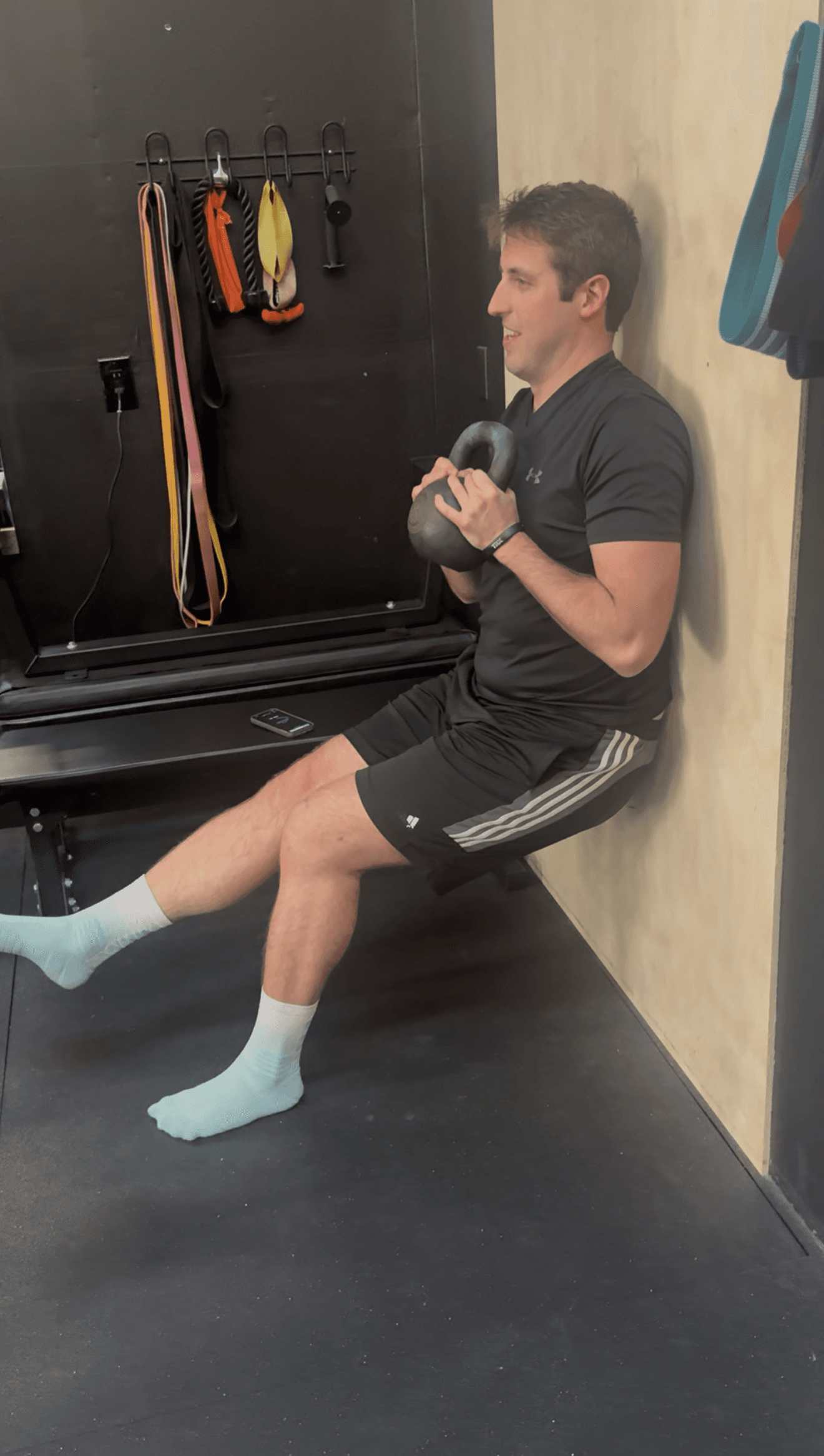
Dr. Graham described using a small foam balance pad under the back foot as well. Because the pad is slightly unstable, it discourages the patient from driving weight into it. The back foot can be used for balance but cannot easily become a crutch for offloading.
Another option is to start with lower-level exercises first, like a step-up with hand support or a shallow split squat with some range of motion limits. The goal is to gradually build tolerance for anterior knee loading, getting the knee comfortable with the sensation of the quads working hard before jumping into a loaded RFESS.
The key insight is this: constraining the movement so that compensation is harder or impossible is often more effective than trying to cue someone out of compensation verbally. The body will find the path of least resistance unless that path is blocked.
What About Multi-Ligament Knee Injuries?
For people recovering from multi-ligament knee injuries, injuries where more than one ligament was damaged or reconstructed, the challenges described in this study are likely even more pronounced.
Multi-ligament injuries are more complex, more painful, and often involve longer timelines before return to activity. The knee's instability, stiffness, and pain during the early phases of recovery can make compensation patterns even stronger. The brain becomes even more protective of the knee, and the avoidance strategies described in this research become more deeply ingrained.
This is one reason why working with a skilled physical therapist in Hillsboro, OR or physical therapist near Beaverton, OR who specializes in complex knee injuries is so important. Cookie-cutter programs that assume exercises are working the way they are supposed to may miss what is really happening inside the movement. Advanced assessment, careful observation, and willingness to modify the exercise program based on what each patient actually needs: rather than what a protocol says can make a real difference in outcomes.
How Physical Therapy Near You Can Help
If you are in the Hillsboro, OR area, Aloha, OR, Beaverton, OR, or Cornelius, OR and you are dealing with knee pain after an ACL surgery or a multi-ligament knee injury, research like this is exactly why finding the right physical therapy team matters.
Physical therapy near Aloha, OR and physical therapy near Cornelius, OR is accessible, and a good clinic will do more than just hand you a list of exercises and send you on your way. A skilled physical therapist will:
Watch how you move and look for the kinds of compensation patterns this study identified. Check whether your quad is actually working during closed-chain exercises or whether your hip is doing most of the talking. Adjust your program based on what they actually see, not just what the exercise is supposed to do in theory. Progress you safely through exercises that do more reliably load the quad while also building the hip, ankle, and whole-leg strength you need for a safe return to activity.
The bottom line is that this study is a reminder that good physical therapy is not just about knowing which exercises to prescribe. It is about understanding what the body is actually doing during those exercises and being willing to change course when the answer is "not what we hoped."
A Note on the Research
This study was conducted with 25 people four months after ACL surgery using a bone-patellar tendon-bone graft. The findings may be somewhat different for people who had hamstring or quad tendon grafts, or for people who are further along in recovery. As with all research, these findings are one important piece of a larger picture.
Megan Graham noted that future research will look at how adding external load changes these compensation patterns. That could tell us whether loading up the RFESS eventually leads to more knee demand, or whether the compensations just get stronger as the weight goes up. Either way, the field of rehab is moving in the right direction, toward a more honest understanding of what exercises actually do inside the body, not just what we hope they do.
If you are looking for a physical therapist in Hillsboro, OR or near any of the surrounding cities to help you fully recover from ACL surgery or any other knee injury, reach out to Pain & Performance Coach LLC, so you can get support from a team that stays current with the latest research and takes an individualized approach to your care. Your quads and your long-term knee health will thank you.
Don’t Miss Out
Join our newsletter to get latest research insights.
References
Graham M, Gohil A, Janatova T, Johnson D, Noehren B. Compensatory movement strategies during the rearfoot elevated split squat after ACL reconstruction. Med Sci Sports Exerc. 2026. doi:10.1249/MSS.0000000000003969
New research shows that people recovering from ACL surgery often cheat the split squat without realizing it, loading their hips instead of their quadriceps. Learn what this means for your recovery and how the team of physical therapists at Pain & Performance Coach LLC (physical therapists near Beaverton, Aloha, and Hillsboro, OR) can help.