Recovering from Plantar Fasciitis in Hillsboro, OR: Your Sciency Guide to Getting Back on Your Feet
By
Dr. Mike Makher
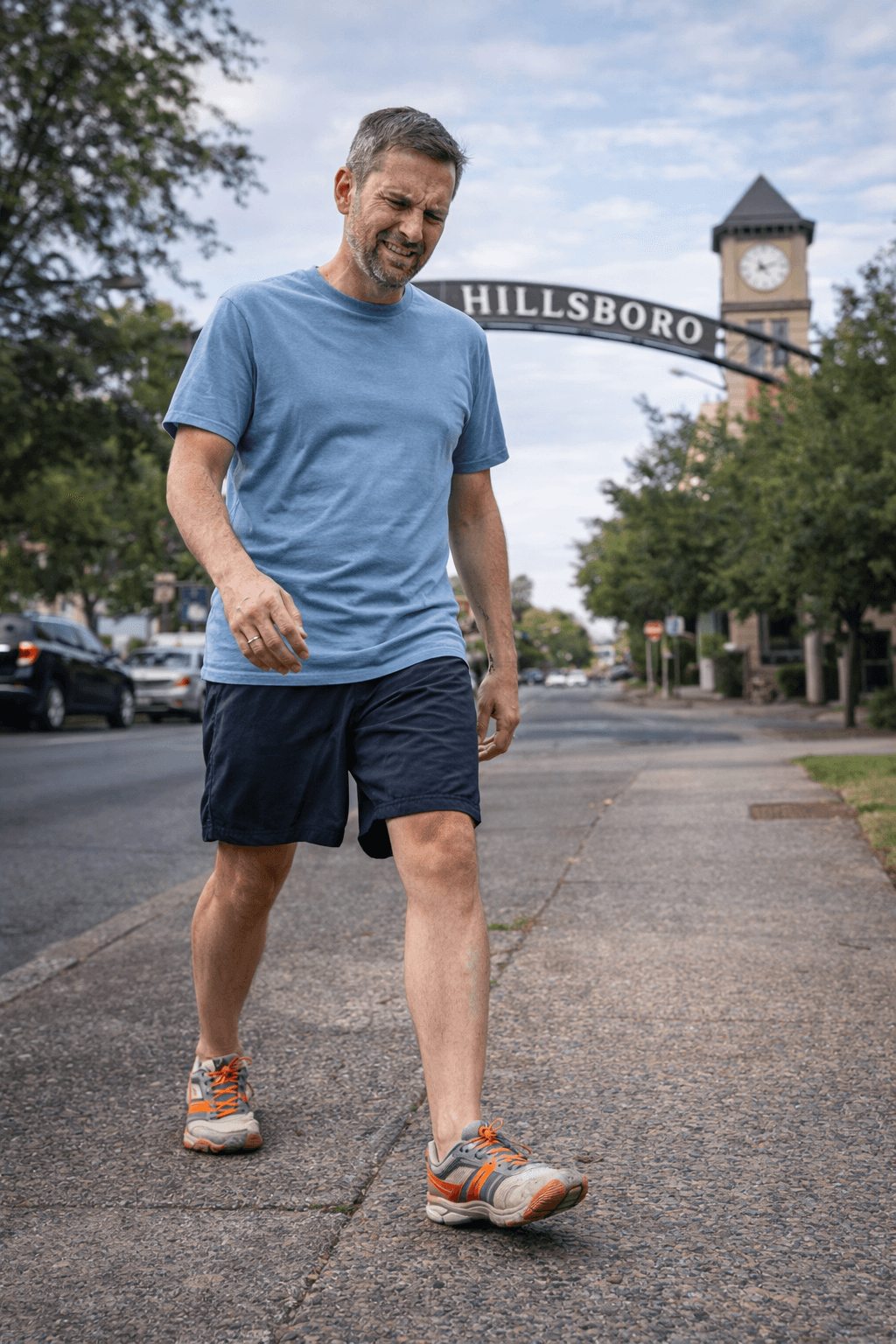
Heel pain stopping your walks or runs in Hillsboro, Aloha, or Beaverton? Learn the evidence-based steps to recover from plantar fasciitis and get moving again.
Disclaimer: This article is for educational purposes only. It should not be seen as medical advice. Every case and person is unique, so treatment and prevention should be customized by a licensed professional.
Recovering from Plantar Fasciitis in Hillsboro, OR: Your Sciency Guide to Getting Back on Your Feet
If you have ever dragged yourself out of bed in the morning and felt that sharp, stabbing pain in your heel with the very first step, you already know plantar fasciitis. It is one of the most frustrating injuries for anyone who loves walking the trails at Rood Bridge Park, logging miles along the Tualatin River Greenway, or racing through a Saturday morning run in the neighborhoods around Reeds Crossing or Tanasbourne. The good news is that this condition is very treatable, especially when you understand what is actually happening in your foot and commit to a structured recovery approach backed by the best available evidence.
Whether you are searching for a physical therapist in Hillsboro, looking for heel pain treatment in Beaverton, or trying to figure out why your plantar fasciitis won't heal, this guide is for you.
d
What Is Plantar Fasciitisddddd and Why Does It Linger?
The plantar fascia is a thick band of connective tissue running along the bottom of your foot, connecting your heel bone (calcaneus) to the base of your toes. Its job is to act like a spring, stabilizing your foot's arch as you walk and run. When this tissue is subjected to repetitive stress beyond its capacity, whether from long hours on your feet, a sudden jump in mileage, or unsupportive footwear, microscopic tears can develop, primarily at the medial (inner) origin where the fascia meets the heel. Over time, this leads to collagen breakdown and tissue degeneration, which is the hallmark of plantar fasciitis.
Plantar fasciitis accounts for more than one million patient visits per year in the United States, with roughly 62% of those visits occurring in primary care settings. It is most common in adults aged 45 to 64, and key risk factors include a higher body mass index (BMI), limited ankle dorsiflexion range of motion, and jobs or activities that require prolonged standing, all highly relevant for the working adults in the greater Portland metro area who spend long shifts on their feet or who run on the concrete paths of Hillsboro and Beaverton.
Here is the sobering reality about the natural history of this condition: plantar fasciitis is often described as self-limiting, but research shows that around 80% of patients still have pain at one year after diagnosis, and as many as 44% continue to have pain at 15 years. That is not a reason to panic, instead its a reason to take your recovery seriously and get the right care early.
Recognizing the Symptoms
The classic presentation is heel pain that is worst with the first few steps in the morning or after sitting for an extended period, sometimes described as walking on broken glass or sharp needles. Pain then tends to ease with movement but may return after prolonged activity. Tenderness is typically concentrated at the medial plantar heel, and passive stretching of the toes (which tightens the plantar fascia) often reproduces the pain.
If your symptoms do not fit this pattern clearly, other conditions can mimic plantar heel pain, including tarsal tunnel syndrome, Baxter nerve entrapment, and calcaneal stress fracture. Imaging is rarely needed initially, studies show that only about 2% of imaged heels in atraumatic plantar heel pain have findings that change initial treatment decisions. A thorough clinical history and physical exam performed by a knowledgeable clinician remain the gold standard for diagnosis.
The Evidence-Based Road Back to Walking and Running
Recovery from plantar fasciitis follows a staged, "stepped care" model that layers treatments based on your progress. Understanding this framework helps you set realistic expectations and know when it is time to escalate your care.
Stage 1: The Core Approach (Weeks 1–6)
The foundation of plantar fasciitis treatment is built on three pillars: plantar fascia stretching, low-dye taping, and individualized education. Research synthesizing high-quality randomized controlled trials alongside expert clinical opinion consistently identifies these as first-line interventions that should be applied together, not in isolation.
Plantar Fascia Stretching is one of the most well-supported treatments in the literature. Studies demonstrate that plantar fascia-specific stretching produces large improvements in first-step pain in both the short and medium term. The technique involves sitting with your affected foot crossed over your opposite knee, pulling your toes back toward your shin until you feel a stretch along the arch of your foot, and holding for 10–30 seconds. Performing this stretch before your first steps of the day, before you even get out of bed, is surprisingly valuable and easy to do. Calf and gastrocnemius stretching should accompany this, as limited ankle dorsiflexion is a consistent risk factor for plantar fasciitis.
Low-Dye Taping is a technique where athletic tape is applied to the foot in a specific pattern to mechanically support the plantar fascia and offload the painful tissue. Research confirms moderate evidence for its efficacy in reducing first-step pain in the short term. Beyond pain relief, taping builds patient confidence and some clinicians also use it as a diagnostic tool: if taping significantly reduces your pain, it could suggest that supportive footwear may replicate that benefit over the long term.
Load Management and Education are the overlooked critical keys of plantar fasciitis recovery. Understanding why your foot hurts, and knowing how to modify your activity without completely stopping movement, is critical. The goal is not total rest, it is smart loading. Breaking up long periods of static standing, avoiding prolonged barefoot walking on hard floors (a common pitfall in Pacific Northwest households), and replacing minimalist or flat footwear with shoes that have a moderate heel-to-toe drop and cushioning are all evidence-supported changes that reduce tissue stress. Having footwear that is comfortable, supportive, and importantly socially acceptable (so you will actually wear it consistently) is critical. Expert clinicians emphasize avoiding barefoot walking until symptoms have fully resolved. This also includes strengthening the foot and ankle, something our team at Pain & Performance Coach specializes in.
Body weight is also a legitimate conversation. Unfortunately a BMI above 30 is associated with more than five times the odds of plantar fasciitis compared to a BMI at 25 or lower. Addressing weight through compassionate, patient-centered discussion could be a *part* of a comprehensive care plan not something to be ignored.
Finally, education must address prognosis honestly but positively: recovery can take weeks to months, and that is normal. Pain monitoring skills, learning to distinguish between uncomfortable but safe activity and genuinely harmful loading, help people stay active throughout recovery rather than becoming fearful and sedentary.
Stage 2: When the Core Approach Is Not Enough — Shockwave Therapy (Around Week 4–6)
If you have been consistently applying the core approach for four to six weeks and your pain has not improved meaningfully, the next step supported by the strongest evidence is extracorporeal shockwave therapy (ESWT). This is actually something we would refer specifically to Dr.Amy Spellmeyer at Spellmeyer Chiropractic for if needed.
ESWT involves applying pulsatile high-pressure sound waves to the plantar fascia using a handheld device. Both focused and radial shockwave variants have shown strong evidence for reducing plantar heel pain, with benefits documented across short, medium, and long-term follow-up. A meta-analysis of nine randomized controlled trials reported that ESWT was associated with meaningfully greater pain reduction than placebo. Notably, ESWT is most appropriate for persistent, non-resolving symptoms rather than acute-onset heel pain, where stretching tends to outperform it.
Adverse effects are generally minor, such as temporary treatment-site discomfort, minor bruising, or skin irritation. Serious side effects are rare. ESWT is typically performed by chiropractors, physiatrists, podiatrists, and in rarer cases even physical therapists. If you are located in the Hillsboro, Aloha, or Beaverton area and your heel pain has been dragging on, this may be a treatment worth exploring. Just keep in mind insurance often doesn't cover this service.
Stage 3: Custom Foot Orthoses (Around Week 12+)
If both the core approach and shockwave therapy have not produced adequate results, custom foot orthoses represent the next rung of the stepped care ladder. There is strong evidence that custom orthoses reduce pain in the short term compared to sham orthoses (SMD 0.41). They work by unloading tissue beneath the heel and redistributing ground reaction forces.
That said, it is worth noting that prefabricated (over-the-counter) orthoses have not been shown to be inferior to custom orthoses for most patients. A well-fitting prefabricated orthosis with appropriate arch support and heel cushioning can often achieve similar results at a fraction of the cost. Custom orthoses become particularly relevant when prior trials of prefabricated options have failed, or when foot structure warrants individualized casting or scanning.
Other Considerations: Corticosteroid and PRP Injections
Corticosteroid injections (CSIs) can provide some short-term pain relief for plantar fasciitis (within the first month) but their benefits tend to diminish beyond six weeks. They also carry a small but real risk of plantar fascia rupture (approximately 2.4% of cases, especially with multiple injections). Because of this, injections are generally considered only after conservative measures have been trialed, not as a first resort.
Platelet-rich plasma (PRP) injections have shown some promise for long-term outcomes: one meta-analysis found that PRP outperformed corticosteroids at 12 months on both pain and functional scores. However, PRP is more costly ($600+ per injection) and not universally covered by insurance, so shared decision-making with your provider is important.
Dry needling may be considered as a secondary adjunct, particularly for managing localized muscle tension, though current evidence suggests it has a neutral effect when analyzed independently. NSAIDs (oral or topical) have not demonstrated significant benefit for plantar fasciitis in well-controlled trials.
Getting Back to Long Walks and Running in Hillsboro
Returning to walking the Waterhouse Trail, pounding the pavement in Orenco Station, or finishing the Shamrock half-marathon requires a thoughtful progression, not just symptom resolution. Pain below a 2–3 out of 10 during activity is generally an acceptable guiding threshold. A structured return-to-run program: starting with walk-run intervals and progressing volume gradually helps rebuild the plantar fascia gradually.
Key milestones before returning to sustained running include: comfortable walking for 30+ minutes without a significant pain flare afterward, adequate calf and ankle mobility, and reasonable single-leg heel raise capacity. A physical therapist experienced in running rehab and lower extremity biomechanics can assess your gait, identify compensatory movement patterns, and build you a plan tailored to your specific goals and schedule.
Pain & Performance Coach: Physical Therapy in SE Hillsboro, Near Reeds Crossing
If you are looking for physical therapy in Hillsboro, OR (especially in SE Hillsboro near Aloha) that blends the latest clinical evidence with your personal values and goals, Pain & Performance Coach is a practice worth knowing about. Located in SE Hillsboro right near Reeds Crossing, this clinic offers a patient-centered, science-informed approach to conditions like plantar fasciitis, heel pain, Achilles tendinopathy, and other musculoskeletal issues affecting your ability to move and live well.
Appointments are often available every week Monday through Friday with flexible hours starting as early as 7:00 AM and running as late as 6:10 PM — making it genuinely accessible whether you are heading in before a long workday in Beaverton or squeezing in care after school pickup in South Hillsboro. If you have been searching for physical therapy near Aloha, sports injury rehab in Beaverton, heel pain treatment near Tanasbourne, or foot and ankle physical therapy in the Portland metro area, Pain & Performance Coach may be exactly what you have been looking for.
Key Takeaways for Plantar Fasciitis Recovery
Plantar fasciitis is common, sometimes stubborn, but very manageable with the right approach. The evidence is clear that a staged, progressive care plan: starting with stretching, taping, load management, and education (escalating to shockwave therapy if needed) and considering orthoses or injections only in really nasty and persistent cases produces the best long-term outcomes.
Do not wait for the pain to become so severe that it sidelines you completely. Whether you are a nurse spending long shifts on your feet, a runner training for Hood to Coast, a walker enjoying trails of the Tualatin Hills Nature Park, or simply someone who wants to walk comfortably through a Hillsboro Hops game, early, evidence-based physical therapy gives you the best chance at a full, lasting recovery.
Your heels were built to carry you far. With the right care, and the right team behind you, they will again.
This article is for informational purposes only and does not constitute medical advice. Please consult a licensed healthcare provider for evaluation and treatment of plantar heel pain or any musculoskeletal condition.
Don’t Miss Out
Join our newsletter to get latest research insights.
References
Morrissey D, Cotchett M, Said J'Bari A, et al. Management of plantar heel pain: a best practice guide informed by a systematic review, expert clinical reasoning and patient values. Br J Sports Med. 2021;55(19):1106-1118. doi:10.1136/bjsports-2019-101970 Cooper MT. Common Painful Foot and Ankle Conditions: A Review. JAMA. 2023;330(23):2285–2294. doi:10.1001/jama.2023.23906
Heel pain stopping your walks or runs in Hillsboro, Aloha, or Beaverton? Learn the evidence-based steps to recover from plantar fasciitis and get moving again.