
Returning to Recreational Sports After Shoulder Replacement: What Helps People Succeed in Hillsboro, Oregon
By
Dr. Mike Makher
Learn how and why people successfully return to recreational sports after shoulder replacement. Evidence-based guidance from Pain & Performance Coach in Hillsboro, OR.
Disclaimer: This article is for educational purposes only. It should not be seen as medical advice. Every case and person is unique, so treatment and prevention should be customized by a licensed professional.
Returning to Recreational Sports After Shoulder Replacement: What Helps People Succeed in Hillsboro, Oregon
For many people, the hardest part of shoulder replacement surgery is not the operation itself, but instead what comes after.
Pain improves. Daily tasks get easier. Sleeping becomes more comfortable. Life feels more manageable again and…yet for many people, one question lingers longer than the rest.
“Can I get back to the sports I love?”
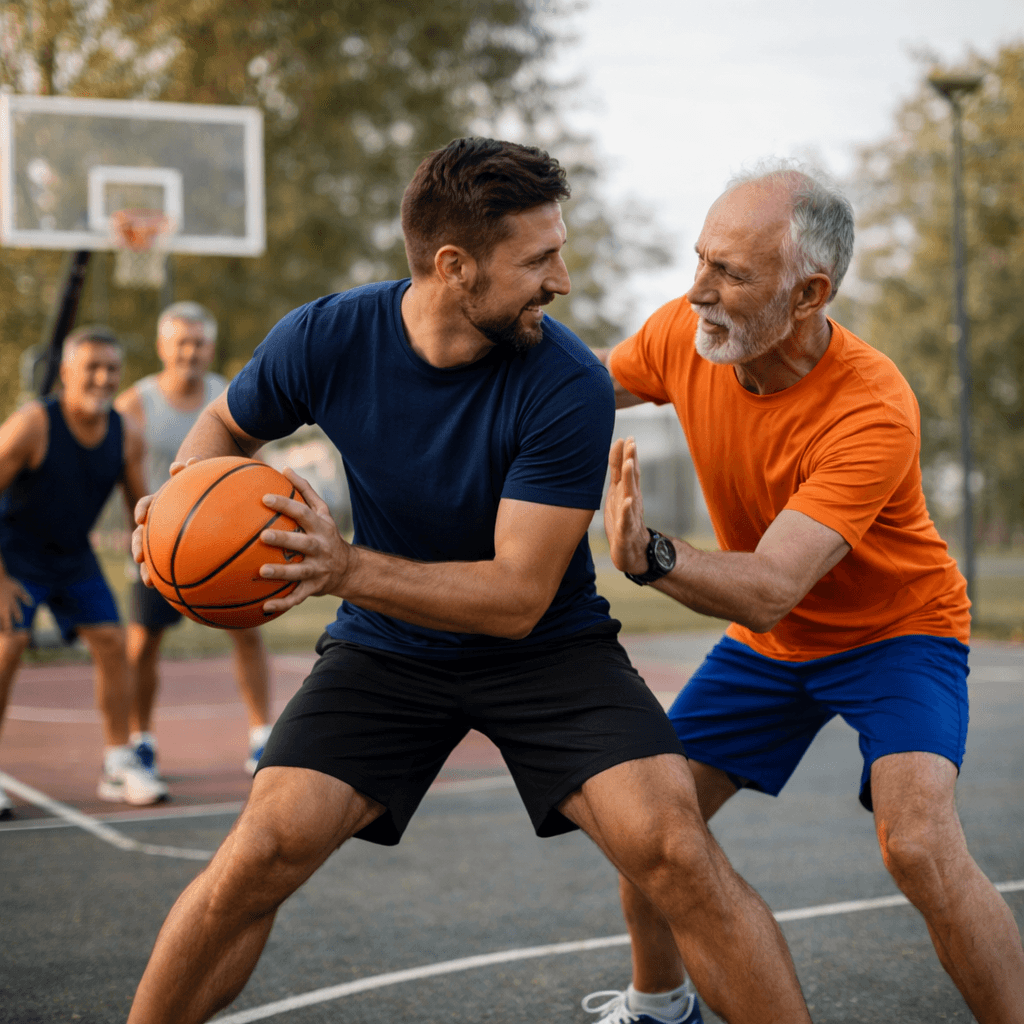
At Pain & Performance Coach in Hillsboro, Oregon, this question is asked by golfers, swimmers, pickleball players, gym-goers, gardeners, and weekend athletes of all kinds. Shoulder replacement often gives people a second chance at movement, but returning to recreational sport takes more than healing alone.
Research shows that most people can return to sport after shoulder replacement. It also shows that not everyone does, and the reasons why are often misunderstood.
This article explains what the research really says, why some people succeed, why others do not, and how sports physical therapy bridges that gap.
What Shoulder Replacement Is Designed to Do
Shoulder replacement surgery is performed when pain and joint damage make everyday life difficult. Common reasons include arthritis, large rotator cuff tears, old injuries, and joint wear that no longer responds to conservative care (usually exercise therapies).
There are several types of shoulder replacement. Anatomic shoulder replacement is used when the rotator cuff muscles still function well. Reverse shoulder replacement is used when those muscles are damaged, shifting more work to the deltoid muscle. Some patients receive partial replacements, called hemiarthroplasty.
Regardless of the type, the purposes are the same: reduce pain and restore useful movement to improve quality of life.
Sports are not the primary goal of surgery, but for many people, they are the reason quality of life truly matters.
How Often People Return to Recreational Sports
Large systematic reviews and meta-analyses provide encouraging news. Around 75 to 85 percent of people return to some form of recreational sport after shoulder replacement.
Golf, swimming, fitness training, and tennis are the most commonly resumed activities. Many people return to the same sports they enjoyed before surgery, and many return at the same or higher level than before, especially after anatomic shoulder replacement.
Return rates tend to be slightly lower after reverse shoulder replacement, but the majority of people still return to meaningful physical activity. Importantly, complications related to sports participation are rare in the research.
These findings confirm something important. Shoulder replacement does not end an active life.
Why Being Active Before Surgery Matters So Much
One of the most consistent findings across studies is this.
People who were active before surgery are far more likely to return to sport after surgery.
In fact, research shows that all patients who returned to sport had participated in their activity within the months leading up to surgery. Those who stopped moving years earlier were much less likely to return, even if their shoulder healed well.
This does not mean surgery failed. It means movement habits matter. Confidence, coordination, and identity as an active person do not disappear overnight, and they are easier to rebuild when they never fully left.
Pain Improves Faster Than Activity Levels
Another important insight from the research is that pain relief happens faster than activity change.
Studies consistently show large improvements in pain, strength, and shoulder function after surgery leading to significant self-reported improvement in terms of quality of life. However, overall activity levels often increase only modestly.
This means people feel better, but they do not always move more because of uncertainty.
Without clear guidance, many people are unsure how much they can do, what is safe, and how to rebuild confidence in their shoulder.
Why Some People Do Not Return to Sport
A recent systematic review focused specifically on this question. Why do some people not return to sport or work after shoulder replacement?
The answer may surprise you since most reasons are not shoulder specific.
Fear of re-injury, lifestyle changes, retirement, loss of routine, other health issues, and lack of confidence are far more common barriers than pain or mechanical problems. Many people stop because they are unsure what is allowed, not because their shoulder cannot handle activity.
Only a smaller group report ongoing shoulder pain, stiffness, or weakness as the main reason for not returning.
This finding changes how recovery should be approached.
Fear and Self-Limitation Play a Major Role
Research shows that most activity restrictions after shoulder replacement are self-imposed rather than surgeon-directed. People limit themselves because they want to protect the joint, even when movement would be safe and beneficial.
This cautious instinct is understandable, but without guidance, it often leads to unnecessary long-term restriction.
Successful return to sport requires education, gradual exposure, and reassurance built through movement, not avoidance.
Differences Between Anatomic and Reverse Shoulder Replacement
Research comparing anatomic and reverse shoulder replacement show meaningful differences in return to sport.
Anatomic shoulder replacement is associated with higher rates of full return to sport and better rotational strength. Reverse shoulder replacement still allows high rates of return, but fewer people resume sports at the exact same level.
This difference reflects shoulder mechanics, not surgical success. Reverse replacement is designed to restore function when rotator cuff muscles are no longer reliable. It works well for daily life and many recreational sports but may limit heavy overhead or high-load activities.
Understanding these differences helps set realistic expectations and improves satisfaction.
What Successful Return to Sport Really Looks Like
Success does not always mean doing everything exactly the same way.
Many people naturally shift toward lower-impact, lower-load activities. Walking, swimming, cycling, golf, and strength training become more appealing and sustainable.
Research shows that satisfaction is highest when people return to activities they enjoy and feel confident performing, rather than chasing unrealistic goals.
Adaptation is not failure. It is a sign of long-term success.
Timing Matters More Than Speed
Keep in mind return to sport after shoulder replacement is not immediate since most people return between six and twelve months after surgery, with continued improvements beyond one year. Those who rush the process often experience frustration or fear, while those who respect the timeline tend to move with more confidence.
Recovery is not passive waiting. It is active rebuilding, done at the right pace.
Why Sports Physical Therapy Makes the Difference
One gap identified across many studies is the lack of sport-specific rehabilitation after shoulder replacement.
Basic rehabilitation restores daily function, but recreational sports require more than lifting the arm overhead. They require strength through range, endurance, coordination, and trust in the joint.
Sports physical therapy focuses on bridging that gap.
At Pain & Performance Coach in Hillsboro, sports physical therapy helps people transition from “healed” to “ready.” Care is built around the demands of the sport and person's life, not just the shoulder itself. Strength is rebuilt and movement patterns are refined, which ultimately leads to confidence growing through guided exposure.
This approach aligns closely with what the research shows leads to successful return.
Returning to Sport in Hillsboro, Oregon
Hillsboro is an active community. People here value movement, independence, and staying engaged in life.
At Pain & Performance Coach, shoulder replacement recovery does not stop when pain improves. It continues until people feel capable, confident, and prepared to return to the activities that matter most to them.
Sports physical therapy provides the structure and reassurance that many people need to succeed, especially when fear or uncertainty becomes the biggest obstacle.
The Real Measure of Success
Success is not just less pain…it's about trusting your shoulder again. Swinging the club without hesitation, swimming without guarding, and/or training without fear.
When people stop thinking about their shoulder and start thinking about the game, the movement, or the moment: full recovery can happen. And that's our ultimate goal at Pain & Performance Coach LLC. Reach out to us via our contact form or call us at (971)-364-0909
Don’t Miss Out
Join our newsletter to get latest research insights.
References
Liu JN, Steinhaus ME, Garcia GH, et al. Return to sport after shoulder arthroplasty: a systematic review and meta-analysis. Knee Surg Sports Traumatol Arthrosc. 2018;26(1):100-112. doi:10.1007/s00167-017-4547-1; Aim F, Werthel JD, Deranlot J, Vigan M, Nourissat G. Return to Sport After Shoulder Arthroplasty in Recreational Athletes: A Systematic Review and Meta-analysis. Am J Sports Med. 2018;46(5):1251-1257. doi:10.1177/0363546517714449; Papalia R, Ciuffreda M, Albo E, et al. Return to Sport after Anatomic and Reverse Total Shoulder Arthroplasty in Elderly Patients: A Systematic Review and Meta-Analysis. J Clin Med. 2020;9(5):1576. Published 2020 May 22. doi:10.3390/jcm9051576; van der Poel WJ, Macken AA, Eygendaal D, Buijze GA, van den Bekerom MPJ. Why do patients not return to sports or work after anatomical or reverse total shoulder arthroplasty? A systematic review and meta-analysis. JSES Int. 2025;9(5):1713-1722. Published 2025 Jun 7. doi:10.1016/j.jseint.2025.05.028; Liu JN, Garcia GH, Mahony G, et al. Sports after shoulder arthroplasty: a comparative analysis of hemiarthroplasty and reverse total shoulder replacement. J Shoulder Elbow Surg. 2016;25(6):920-926. doi:10.1016/j.jse.2015.11.003; Shimada Y, Matsuki K, Sugaya H, et al. Return to sports and physical work after anatomical and reverse shoulder arthroplasty. J Shoulder Elbow Surg. 2023;32(7):1445-1451. doi:10.1016/j.jse.2022.12.025; Garcia GH, Mahony GT, Fabricant PD, et al. Sports- and Work-Related Outcomes After Shoulder Hemiarthroplasty. Am J Sports Med. 2016;44(2):490-496. doi:10.1177/0363546515613077; Baumgarten KM, Chang PS, Dannenbring TM, Foley EK. Does total shoulder arthroplasty improve patients' activity levels?. J Shoulder Elbow Surg. 2018;27(11):1987-1995. doi:10.1016/j.jse.2018.03.028
Learn how and why people successfully return to recreational sports after shoulder replacement. Evidence-based guidance from Pain & Performance Coach in Hillsboro, OR.
What New Knee Research Means for Patients in Hillsboro, Beaverton, Aloha, and Nearby Towns
Sep 6, 2026
By
Dr. Mike Makher

ACL Tear: Is Surgery Your Only Option, or Can Physical Therapy Alone Get You Back to Sport?
Aug 23, 2026
By
Dr. Mike Makher

ACL Recovery Guide for Hillsboro, OR
Aug 13, 2026
By
Dr. Mike Makher