
Why a Simple Strength Test Predicts Long Term Health for Hillsboro Residents

By
Dr. Mike Makher
New research shows that grip strength and simple muscle tests predict long term health risks like heart disease and early death. Learn what it means for Hillsboro, Aloha, Beaverton, and Forest Grove residents.
Disclaimer: This article is for educational purposes only. It should not be seen as medical advice. Every case and person is unique, so treatment and prevention should be customized by a licensed professional.
What if a quick strength test could help predict your future health?
It may sound surprising. But new research shows that it can.
Scientists reviewed many long term health studies from around the world. They wanted to know if muscle strength could predict future health problems.
The answer was clear.
People with stronger muscles tended to live longer and develop fewer chronic diseases.
Even more surprising, one of the most useful tests was extremely simple.
It is called a grip strength test.
Doctors and physical therapists use it to measure how strong your hands are. That small number can tell us a lot about overall health.
For people living in Hillsboro, Beaverton, Aloha, and Forest Grove, this research has an important message.
Strength is not just about fitness.
Strength is a powerful marker of long term health.
What Is Grip Strength?
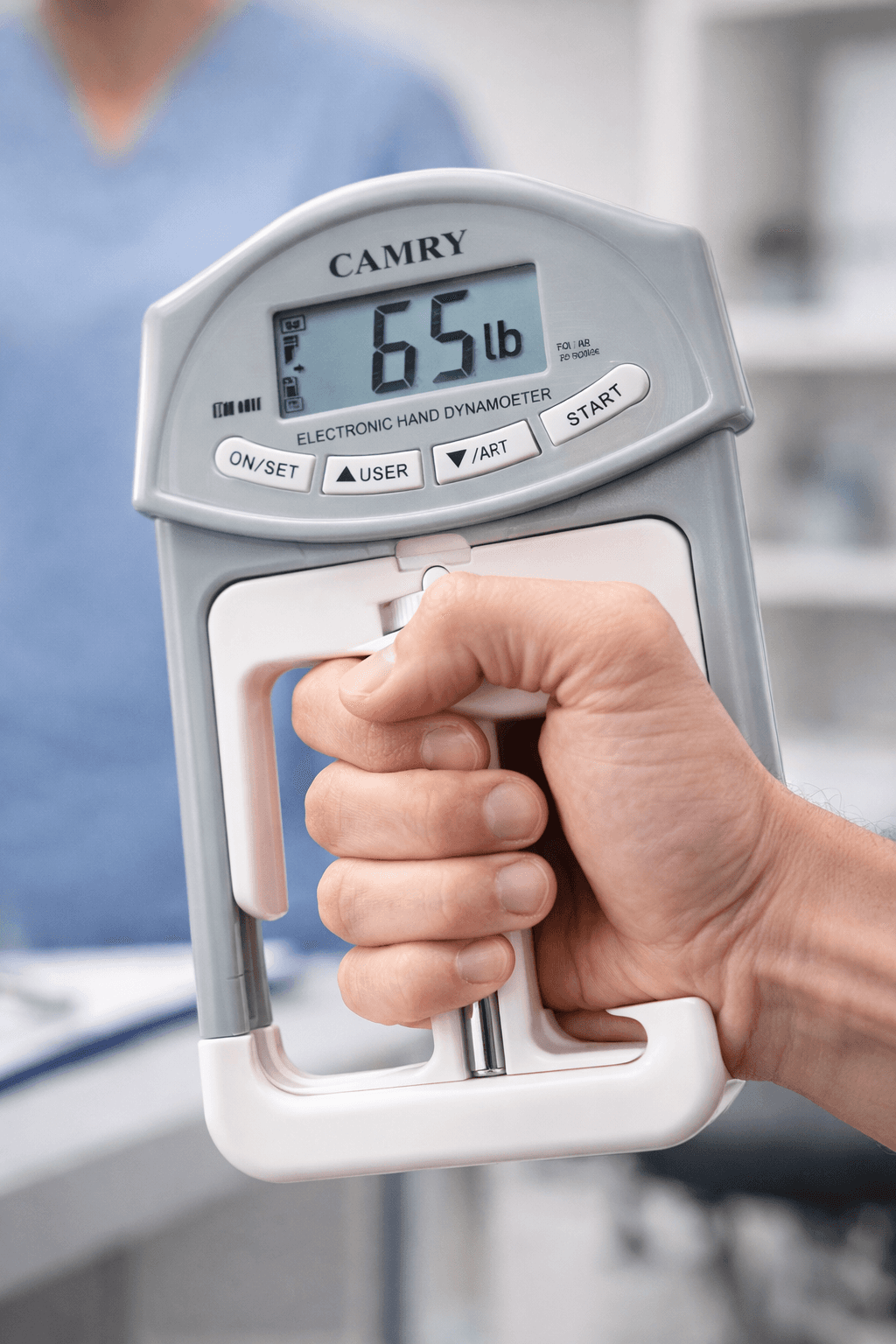
Grip strength measures how hard you can squeeze.
The test uses a small device called a dynamometer.
You squeeze the handle as hard as you can.
The device records your force.
The test takes less than a minute.
Despite being simple, it reflects the strength of many muscles in the body.
Researchers now consider it one of the best quick indicators of physical health.
What the Research Found
Researchers analyzed dozens of large long term studies.
These studies followed adults for many years.
They compared muscle strength with future health outcomes.
The pattern appeared again and again.
People with higher strength levels had lower risk of:
Heart disease
Stroke
Type 2 diabetes
Certain cancers
Early death
People with lower strength had higher risk.
This does not mean grip strength directly causes disease. But it strongly reflects how healthy the body is overall.
Why Muscle Strength Matters for Health
Muscle tissue plays an important role in many systems of the body.
Muscles help regulate blood sugar.
They support joints and bones.
They improve balance and stability.
They also reduce inflammation in the body.
When muscle strength declines, the body becomes less resilient.
Over time this can increase the risk of disease.
That is why researchers are now paying close attention to strength testing.
Strength Is a Marker of Whole Body Health
Grip strength does not only measure hand muscles.
It reflects overall muscle quality.
People with stronger grip strength often have:
Better metabolism
Higher physical activity levels
Better balance and coordination
Greater cardiovascular fitness
All of these factors support long term health.
Because of this, grip strength has become a powerful screening tool.
Strength Loss Often Happens Slowly
Most people do not notice strength loss right away.
Muscle mass usually peaks in early adulthood.
After age 30, many people begin losing muscle less gradually than before.
This process speeds up with inactivity.
Without regular strength training, adults may lose significant muscle by age 60.
This loss can lead to:
Joint pain
Falls
Mobility limitations
Loss of independence
But there is good news.
Muscle strength can improve at almost any age.
Strength Training Protects Long Term Health
Strength training is one of the most powerful tools for protecting health.
It helps improve insulin sensitivity. This lowers diabetes risk.
It supports bone density. This lowers fracture risk.
It also improves cardiovascular health.
Even moderate resistance exercise can create meaningful improvements.
Examples include:
Resistance bands
Dumbbells or Kettlebells
Functional strength training
For most adults, two or three strength sessions each week can help maintain muscle.
Strength Helps Prevent Chronic Disease
One of the strongest findings from the research is the connection between strength and chronic disease prevention.
Stronger muscles help the body manage blood sugar.
They also support healthy blood pressure levels.
Strength training has been shown to improve cholesterol profiles.
Over time these changes reduce the risk of heart disease and metabolic disease.
This is one reason strength training is recommended by major health organizations.
Strength Also Protects Daily Function
Strength is not only about disease prevention.
It also supports everyday life.
Simple daily activities require strength.
Examples include:
Standing up from a chair
Carrying groceries
Walking stairs
Lifting objects
Playing with children
When strength declines, these tasks become harder.
Maintaining strength helps people stay independent longer.
Why Physical Therapy Matters for Strength
Many people are unsure how to safely begin strength training.
This is where physical therapy can help.
A physical therapist can evaluate movement patterns and strength levels.
They can also identify functiona; weakness that may lead to injury.
At Pain & Performance Coach, physical therapy programs focus on:
Movement quality
Strength development
Injury prevention
Performance improvement
Longevity
You can learn more about the clinic approach here:
https://painperformancecoach.com/
For people recovering from injury, strength rebuilding is especially important.
A guided plan helps restore muscle safely.
Signs Your Strength May Be Declining
Many people notice small signs of strength loss before major problems appear.
Common early signs include:
Difficulty opening jars
Struggling with heavy bags
Feeling weaker when standing up
Poor balance
Fatigue during simple tasks
These signs often appear gradually.
Early strength training can help reverse the trend.
How Strength Testing Is Used in Clinics
Grip strength testing is becoming more common in medical settings.
Clinics use it to:
Screen overall physical health
Track recovery after injury
Measure progress during rehabilitation
Identify patients at higher health risk
Because the test is fast and inexpensive, it is useful for many patients.
What This Means for People in Washington County
For people living in Washington County communities like Hillsboro, Beaverton, Aloha, and Forest Grove, this research reinforces a simple idea.
Strength training is not optional.
It is one of the best investments you can make in long term health.
Maintaining muscle strength can help reduce injury risk, improve mobility, and support long term independence.
Clinics like Pain Performance Coach help patients build strength safely while recovering from injuries or improving performance.
Learn more about treatment options here:
https://painperformancecoach.com/
Simple Ways to Improve Strength
Improving strength does not require extreme workouts.
Small steps done consistently work best; focusing on slow, controlled movements.
Two to three sessions of strength training each week can create meaningful improvements over time.
The Big Takeaway From the Research
The research sends a clear message.
Muscle strength is one of the strongest predictors of long term health.
A simple grip strength test can reveal valuable information about the body.
Stronger people tend to have lower risk of chronic disease and early death.
The encouraging part is this.
Strength can improve at any age.
Even small steps toward building muscle can create long term health benefits.
FAQs
Can grip strength really predict health problems?
Research shows grip strength is strongly associated with future health outcomes. Lower grip strength has been linked to higher risk of cardiovascular disease, diabetes, and early mortality. This is likely due to the fact that active individuals who do resistance training (or manual tasks involving grip strength) tend to have better grip strength, and more active individuals are simply healthier than sedentary people.
Why do doctors test grip strength?
Grip strength provides a way to measure muscle function. It helps clinicians estimate physical resilience and health status.
Can strength training reduce disease risk?
Yes. Strength training improves blood sugar control, cardiovascular health, bone density, and metabolic health. These changes reduce the risk of chronic diseases.
How often should adults train strength?
Most health organizations recommend strength training two to three times per week for major muscle groups.
Don’t Miss Out
Join our newsletter to get latest research insights.
References
Marín-Jiménez N, Bizzozero-Peroni B, Molina-Garcia P, et al. Clinical importance of simple muscular fitness tests to predict long-term health conditions: a systematic review and meta-analysis of 94 cohort studies. Br J Sports Med. 2026. doi:10.1136/bjsports-2024-109173
New research shows that grip strength and simple muscle tests predict long term health risks like heart disease and early death. Learn what it means for Hillsboro, Aloha, Beaverton, and Forest Grove residents.
What New Knee Research Means for Patients in Hillsboro, Beaverton, Aloha, and Nearby Towns
Sep 6, 2026
By
Dr. Mike Makher

ACL Tear: Is Surgery Your Only Option, or Can Physical Therapy Alone Get You Back to Sport?
Aug 23, 2026
By
Dr. Mike Makher

ACL Recovery Guide for Hillsboro, OR
Aug 13, 2026
By
Dr. Mike Makher