
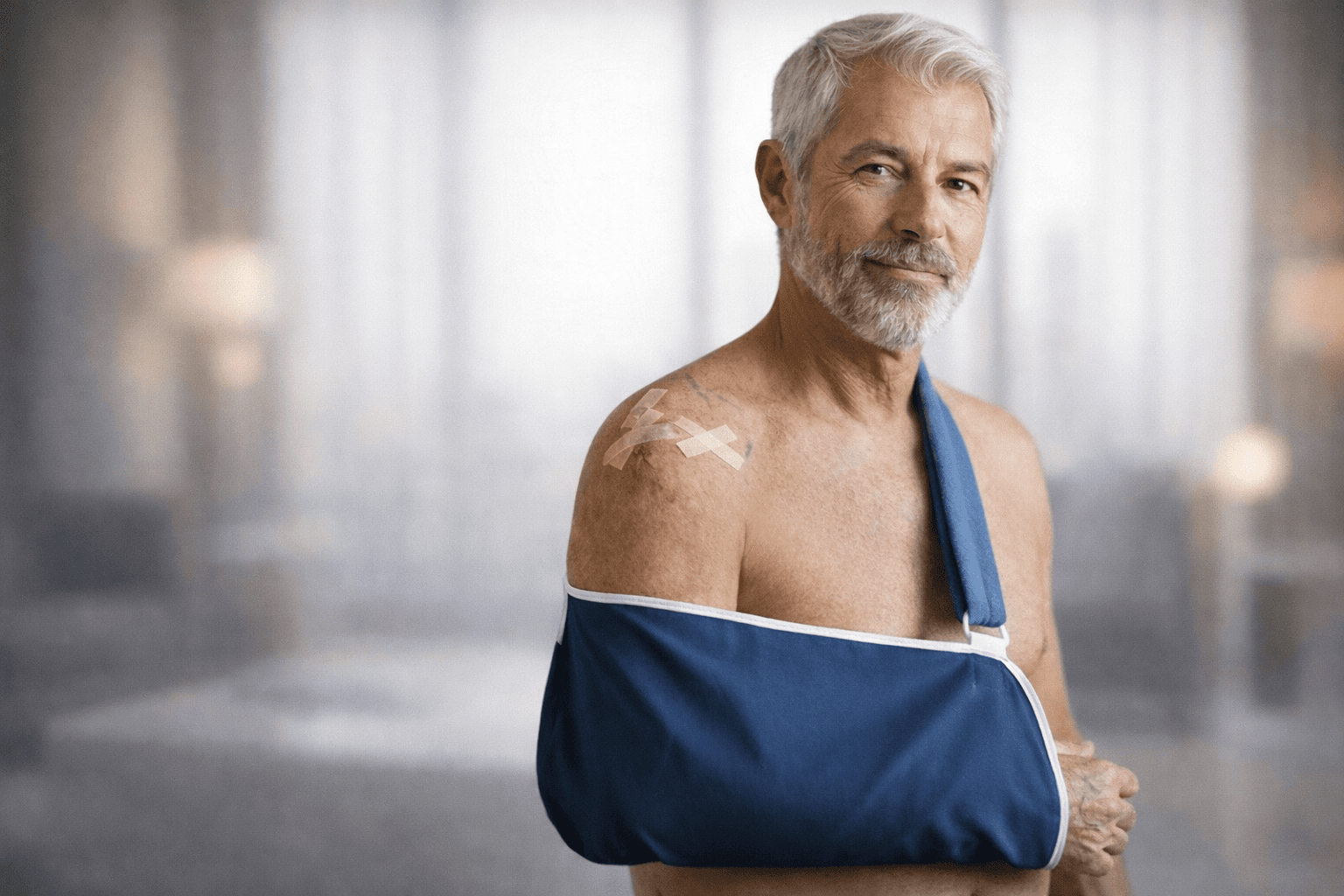
Best Rotator Cuff Surgery Recovery in Hillsboro and Aloha, OR
By
Dr. Mike Makher
Recovering from rotator cuff surgery in Hillsboro or Aloha, OR? Learn the evidence-based rehab timeline, when to move, when to strengthen, and how to protect your repair for long-term success.
Disclaimer: This article is for educational purposes only. It should not be seen as medical advice. Every case and person is unique, so treatment and prevention should be customized by a licensed professional.
Best Rotator Cuff Surgery Recovery in Hillsboro and Aloha, OR
In Hillsboro and Aloha, rotator cuff repair is one of the most common orthopedic surgeries performed on adults who work with their hands, commute long distances, or stay active well into middle age. Whether the injury came from repetitive overhead work, weekend athletics, a traumatic event, or a slow-burning degenerative tear, surgery is only the beginning. The outcome depends far more on rehabilitation than on the operation itself.
That reality often surprises patients. Many expect pain to fade quickly and strength to return naturally. Instead, recovery unfolds over months, sometimes a year, governed not by motivation but by biology. Tendons heal slowly. Bone-tendon integration is fragile early on. Move too little and stiffness sets in. Move too much and repairs fail.
Modern rotator cuff rehabilitation guidelines, including those used by large academic centers and military health systems, are designed to walk that narrow line, protecting the repair early while restoring motion and strength at the right time.
Why Rotator Cuff Rehab Takes So Long, Even When You Feel “Fine”
The rotator cuff is not a muscle injury in the usual sense. After surgery, the repaired tendon must biologically reattach to bone. That process takes weeks to months, and early fixation strength does not equal biological strength.
Studies consistently show that tendon-to-bone healing remains vulnerable for at least 8 to 12 weeks, even when pain is minimal and motion feels easy.
Large and massive tears, which are common in patients over 50, require even longer protection because tissue quality and blood supply are compromised.
This matters locally. In Washington County, many patients return to physically demanding jobs or long commutes early. The shoulder might feel capable before it is structurally ready. Physical therapy is meant to prevent that issue from coming up.
Phase I: Protection First, Motion Second (Weeks 0–6)
The first phase of post–rotator cuff repair rehab is deliberately conservative, and for good reason.
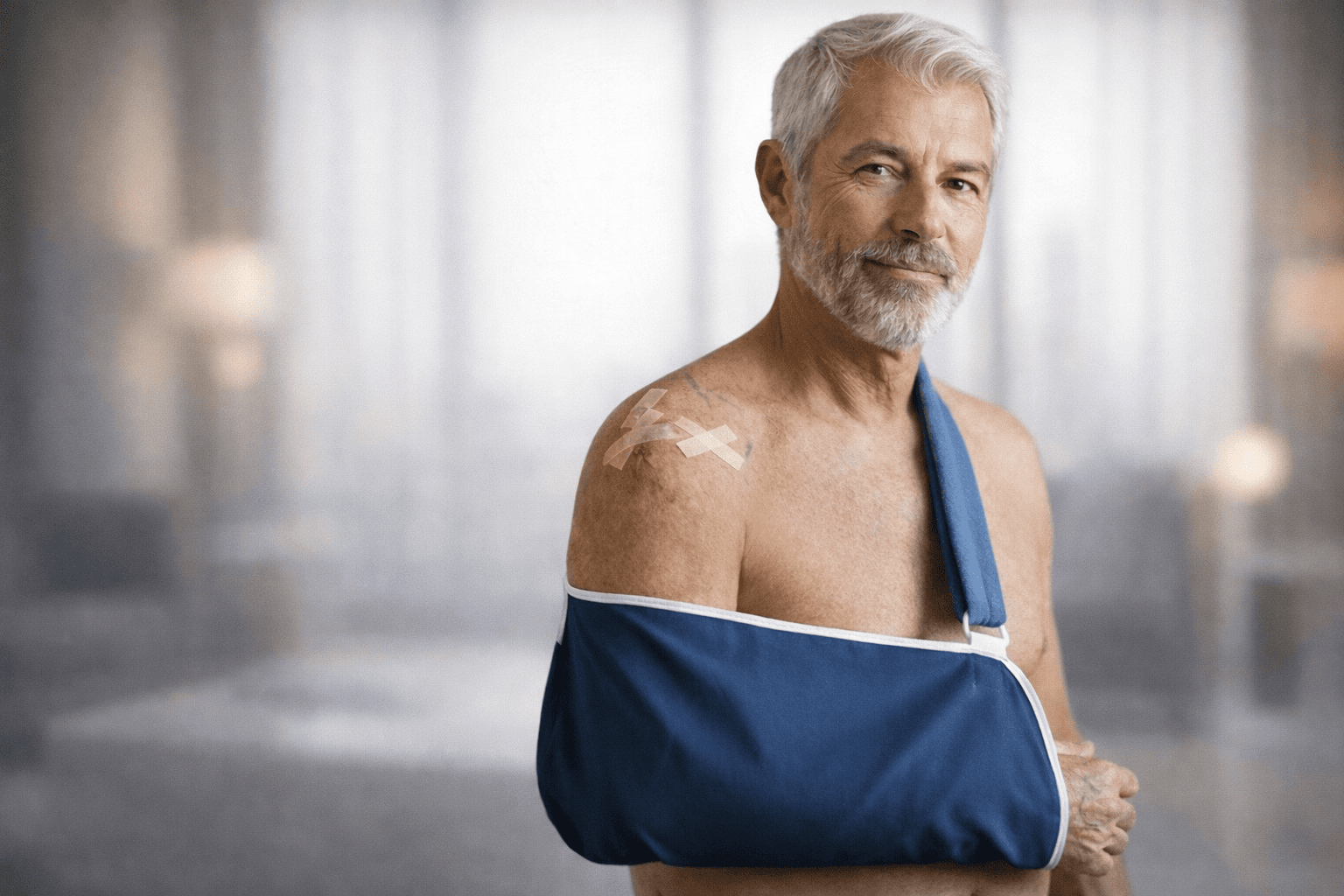
Patients in Hillsboro and Aloha are typically placed in a sling full-time for 4 to 8 weeks, depending on tear size and surgical findings. For large or massive tears, sling use often extends closer to the eight-week mark.
During this phase, the goals are simple but critical: protect the repair, manage inflammation, and prevent joint stiffness without activating the rotator cuff muscles.
Often only passive range of motion is allowed. That means the shoulder moves, but the muscles stay quiet. Consequently patients are often told no lifting, reaching, and definitely no “testing it out.” Pain is not a reliable indicator of safety at this stage.
Phase II: Assisted Motion Without Load (Weeks 6–8)
Once early biological healing has begun, rehabilitation shifts carefully toward motion that the patient assists but does not yet control independently.
Active-assisted range of motion begins during this phase. This includes guided elevation, external rotation, and controlled functional use below shoulder height.
Importantly, this is where many patients ask about moving sooner. Recent research has explored whether earlier motion improves outcomes or increases risk.
A 2025 cohort study comparing early versus delayed mobility after arthroscopic rotator cuff repair found that patients who began controlled motion earlier demonstrated greater shoulder range of motion at six weeks and greater strength at twelve weeks, without higher re-tear rates at one year. However, the study excluded large tears, which limits how broadly those findings apply.
This nuance matters, as early motion can be very safe in many cases (despite the often recommended restriction of motion in the early weeks) even though most protocols still prioritize cautious protection when tissue quality or tear size increases.
Phase III: Active Motion and Motor Control (Weeks 8–12)
Between weeks eight and twelve, almost all patients begin active shoulder motion without assistance. This is not strengthening yet. It is relearning how to move the shoulder without compensating.
Rehabilitation focuses on smooth elevation, scapular control, and avoiding shoulder shrugging patterns that overload healing tissue.
Strengthening remains limited to sub-maximal isometrics, which are exercise that activate muscle without joint movement (so squeezing the muscle in place). This allows the shoulder muscles to neurologically get retraining while keeping tendon strain low.
Phase IV: Progressive Strengthening (3–6 Months)
True strengthening begins only after the repair has sufficient biological integrity.
Most protocols delay resisted rotator cuff strengthening until at least 12 weeks post-op, and longer for large tears. Exercises progress from high-repetition, low-load work to gradually increasing resistance, emphasizing endurance before power.
Scapular stabilizers, trunk strength, and thoracic mobility remain central. Shoulder strength without higher regional stability does not translate well to real-world tasks, whether that is overhead work, lifting groceries, or recreational sports.
By four to six months, most patients regain functional strength and near-normal motion, though endurance and overhead tolerance may still lag.
Phase V: Return to Work, Sport, and Long-Term Durability (6–12 Months)
Returning to full activity is not about hitting a date on the calendar but rather about demonstrating capacity under the demands of load.
Military and academic guidelines suggest that unrestricted return to heavy labor or sport may require six to twelve months, depending on task demands and tear severity.
Long-term outcomes depend heavily on continued strengthening. Patients who stop structured exercise at three or four months often plateau, while those who maintain progressive loading see better durability and lower re-injury rates.
What About Pain During Rehab?
Pain is a poor compass early after surgery. A 2025 systematic review examining painful versus non-painful exercise in chronic musculoskeletal conditions found no clear difference in pain or disability outcomes, with very low certainty evidence overall.
In post–rotator cuff repair rehab, pain is not reliably signal tissue tolerance. That is why progression is based on time, quality of motion, and surgical context, not just symptoms.
The Takeaway for Hillsboro and Aloha Patients
Rotator cuff repair rehabilitation is not about toughness or speed. It is about respecting biology, sequencing load correctly, and staying consistent long after pain fades.
Patience is required during the physical therapy process after a rotator cuff repair and often shortcuts don't work. If you want to learn more, don't hesitate to fill out our contact form or give us a call at 971-364-0909.
Don’t Miss Out
Join our newsletter to get latest research insights.
References
Gundersen Lutheran Medical Center. Rotator Cuff Repair Rehabilitation Program for Large and Massive Tears; Defense Health Agency. Tri-Service Post-Operative Rotator Cuff Repair Rehabilitation Guidelines; University of Calgary Sport Medicine Centre. Post-Operative Shoulder Rehabilitation Protocol; Tran I, Gibbs MT, Yu N, et al. Effectiveness of painful versus nonpainful exercise on pain intensity, disability, and other patient-reported outcomes in adults with chronic musculoskeletal pain. J Orthop Sports Phys Ther. 2025;55(8):527–537; Tang H, Yang P, Wang X, Zhao B, Ling K. Assessment of the efficacy of early versus delayed mobility exercise after arthroscopic rotator cuff repair. Int Orthop. 2025;49:1411–1420; Silveira A, Luk J, Tan M, et al. Move it or lose it? The effect of early active movement on clinical outcomes following rotator cuff repair. J Orthop Sports Phys Ther. 2021;51(7):331–344.
Recovering from rotator cuff surgery in Hillsboro or Aloha, OR? Learn the evidence-based rehab timeline, when to move, when to strengthen, and how to protect your repair for long-term success.
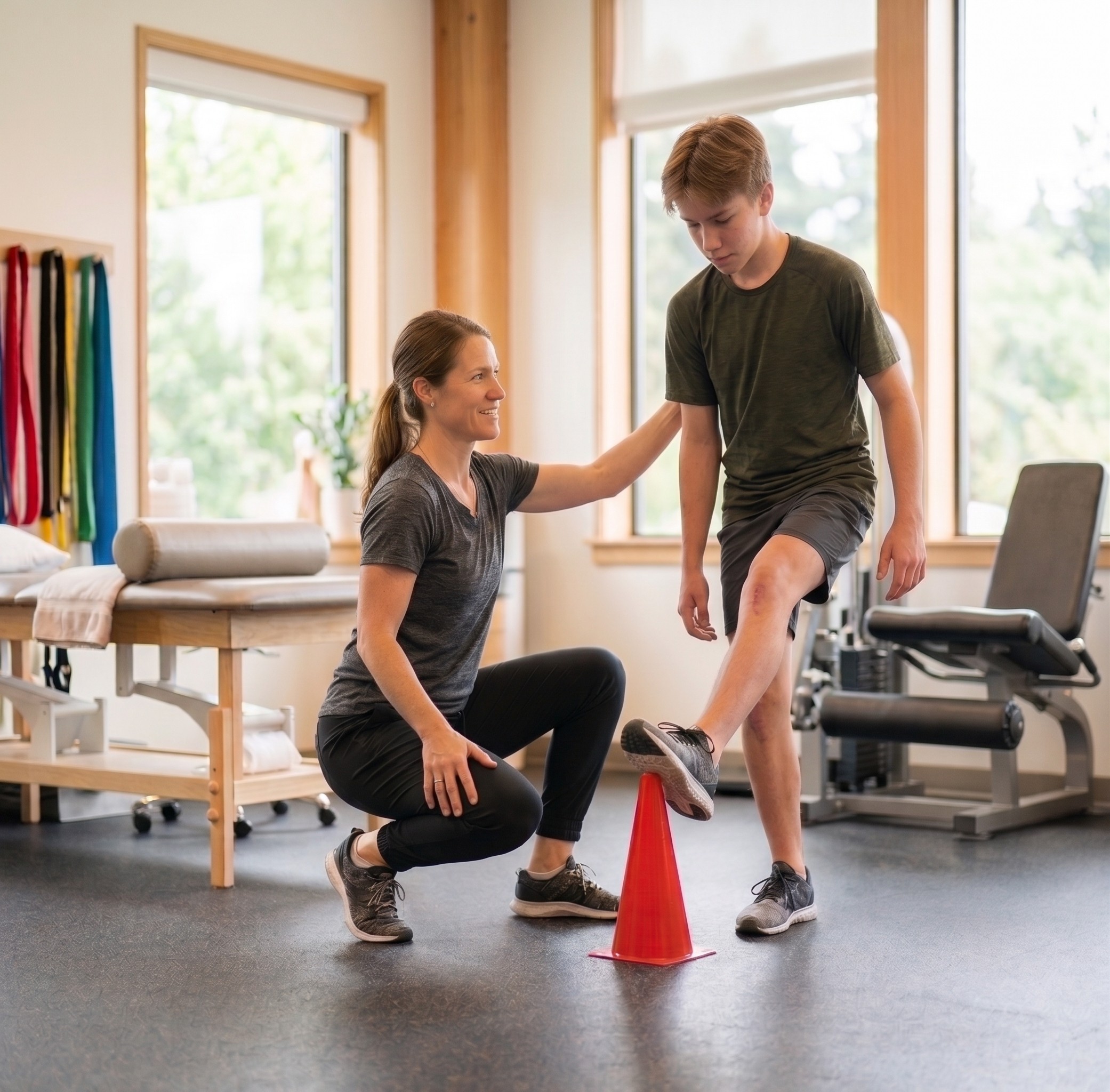
What New Knee Research Means for Patients in Hillsboro, Beaverton, Aloha, and Nearby Towns
Sep 6, 2026
By
Dr. Mike Makher

ACL Tear: Is Surgery Your Only Option, or Can Physical Therapy Alone Get You Back to Sport?
Aug 23, 2026
By
Dr. Mike Makher

ACL Recovery Guide for Hillsboro, OR
Aug 13, 2026
By
Dr. Mike Makher