

Hip Pain Relief in Hillsboro, OR: Simple, Evidence-Based Ways to Improve Hip Osteoarthritis

By
Dr. Mike Makher
Learn simple, proven ways to reduce hip pain and improve movement in Hillsboro, OR. Based on 2025 clinical practice guidelines for hip osteoarthritis.
Disclaimer: This article is for educational purposes only. It should not be seen as medical advice. Every case and person is unique, so treatment and prevention should be customized by a licensed professional.
Hip Pain Is Common, But It Is Not Random
Hip pain is something many people deal with as they get older. It often starts slowly. At first, it may feel like stiffness in the morning. Later, it may hurt when you walk, stand, or go up stairs.
One of the most common causes of hip pain is hip osteoarthritis. This is a condition where the joint wears down over time. It affects not just the joint, but also the muscles around it.
The 2025 update from the Journal of Orthopedic and Sports Physical Therapy clinical practice guideline for "Hip Pain and Mobility Deficits—HipOsteoarthritis" explains that hip osteoarthritis is a long-term condition that develops over many years. It is linked to things like age, body weight, past injuries, and how the hip is shaped .
This means hip pain is not something that suddenly appears without reason. There are patterns, causes…and most importantly there are ways to manage it.
What Hip Osteoarthritis Feels Like
Hip osteoarthritis usually shows up in a few common ways.
Many people feel pain in the front of the hip or groin. Some feel it on the side or even in the back of the hip. The pain can travel down the thigh and sometimes reach the knee.
The guideline explains that pain often gets worse with weight-bearing activities. That includes walking, standing, or climbing stairs .
Stiffness is another big sign. This often happens in the morning. It usually lasts less than one hour.
Over time, movement becomes more limited. The hip may not rotate or bend as well as it used to. Internal rotation and flexion are often the first movements to become stiff .
As the condition progresses, all hip movements may become painful and limited.
Why Movement Gets Worse Over Time
Hip osteoarthritis affects more than just the joint.
The guideline explains that the muscles around the hip also lose strength. This is especially true for the hip abductor muscles .
When these muscles weaken, walking changes. People may limp or shift their weight to avoid pain. This can lead to more strain on the joint.
The joint itself also changes. The space between the bones gets smaller. The body may form extra bone in the joint. These changes reduce how smoothly the hip moves.
Over time, this creates a cycle:
Pain leads to less movement
Less movement leads to weakness
Weakness leads to more stress on the joint
More stress leads to more pain
Breaking this cycle is a key part of treatment.
The Most Important Treatment: Exercise
The guideline gives the strongest recommendation to exercise. This means it is one of the most supported treatments by research.
Clinicians should prescribe an individualized exercise program to improve movement, strength, function, and pain .
What This Looks Like
Exercise is not one single thing. It includes:
Strengthening exercises
Flexibility exercises
Endurance activities
Functional movements
Programs are usually done:
1 to 5 times per week
30 to 120 minutes per session
Over 5 to 16 weeks
Why Exercise Works
Research in the guideline shows that exercise helps:
Reduce pain
Improve function
Improve walking ability
Increase strength
The benefits can last months after the program ends .
Exercise also has very low risk. Studies show that harm from exercise is rare.
Supervised Exercise Matters
The guideline shows that supervised programs work better than doing exercises alone at home.
Programs that include guidance, feedback, and progression lead to better results.
Strength Training Is Especially Important
Not all exercise is equal.
The guideline explains that progressive strength training leads to better results than simple activity or unsupervised programs .
This means gradually increasing resistance over time.
Strong muscles help:
Support the joint
Reduce stress on the hip
Improve movement control
Decrease pain during activity
The hip and thigh muscles are especially important.
Water-Based Exercise Can Help Too
Some people find exercise painful at first. For them, water-based exercise can be a good option.
The guideline shows that aquatic exercise can improve:
Strength
Movement
Balance
Pain
Water reduces the load on the joint. This allows movement with less pain.
Manual Therapy Can Improve Movement
Manual therapy is another strongly recommended treatment.
This includes hands-on techniques done by a physical therapist.
The guideline states that manual therapy should be used to:
Increase range of motion
Decrease pain
Improve function
What This Includes
Manual therapy may involve:
Joint mobilization
Soft tissue work
Gentle traction of the hip
These techniques help the joint move more freely.
How It Helps
Studies show that manual therapy can:
Improve hip motion
Reduce pain
Improve walking ability
These changes can happen quickly, even after a single session.
Manual therapy often works best when combined with exercise.
Dry Needling May Help Short-Term
The guideline also supports dry needling for certain cases.
Dry needling targets tight muscle areas called trigger points.
It can be used for muscles like:
Iliopsoas
Rectus femoris
Gluteus medius
Gluteus minimus
What It Does
Dry needling may help:
Improve muscle flexibility
Reduce pain
Improve movement
These effects are mostly short-term, around 3 weeks.
Education Is a Key Part of Treatment
Education is not just extra information. It is a core part of care.
The guideline recommends teaching patients about:
Activity changes
Exercise
Weight management
Ways to reduce joint stress
Why This Matters
Understanding the condition helps people:
Make better daily choices
Stay active safely
Avoid movements that increase pain
Education also improves long-term results when combined with exercise.
Weight Management Reduces Stress on the Hip
Body weight plays a major role in hip pain.
The guideline recommends working with healthcare providers to support weight loss when needed .
Why Weight Matters
Extra body weight increases the load on the hip joint.
Reducing weight can:
Decrease joint stress
Reduce pain
Improve movement
Even small changes can make a difference.
Walking, Balance, and Daily Movement Training
Hip osteoarthritis affects how people move every day.
The guideline recommends training that focuses on:
Walking
Balance
Functional activities
What This Includes
Practicing walking patterns
Improving balance
Learning how to move safely
Using tools like canes if needed
This type of training helps people stay independent.
What About Ultrasound and Bracing?
Some treatments are less strongly supported.
Ultrasound
The guideline says ultrasound may be used, but evidence is mixed. Patients should understand that benefits are not clear .
Bracing
Bracing is not recommended as a first step.
It may be used later if other treatments do not help with certain activities .
How Progress Is Measured
Tracking progress is important.
The guideline recommends using both:
Self-reported measures
Physical performance tests
Examples
Walking tests
Sit-to-stand tests
Balance tests
These help show real improvements in daily function.
What This Means for You
Hip pain from osteoarthritis can feel limiting. But the guideline makes something very clear.
There are effective, non-surgical ways to improve pain and movement.
The most important steps include:
Staying active
Building strength
Improving movement
Learning how to manage load on the joint
Progress takes time, but it is possible.
A Simple Plan Based on the Guideline
Here is a simple way to think about treatment:
Start with education
Begin a structured exercise program
Add manual therapy if needed
Progress strength over time
Improve walking and daily movement
Address weight if needed
Use additional tools like dry needling when appropriate
Each step builds on the one before it.
Final Thoughts
Hip osteoarthritis is common, but it does not have to control your life.
The 2025 clinical guideline shows that movement, strength, and education are the foundation of care.
The key is not doing everything at once. It is doing the right things consistently.
With the right approach, many people can reduce pain, move better, and stay active for years.
Don’t Miss Out
Join our newsletter to get latest research insights.
References
Koc TA Jr, Cibulka M, Enseki KR, et al. Hip pain and mobility deficits, hip osteoarthritis revision 2025 clinical practice guidelines. J Orthop Sports Phys Ther. 2025;55(11):CPG1-CPG31. doi:10.2519/jospt.2025.0301
Learn simple, proven ways to reduce hip pain and improve movement in Hillsboro, OR. Based on 2025 clinical practice guidelines for hip osteoarthritis.
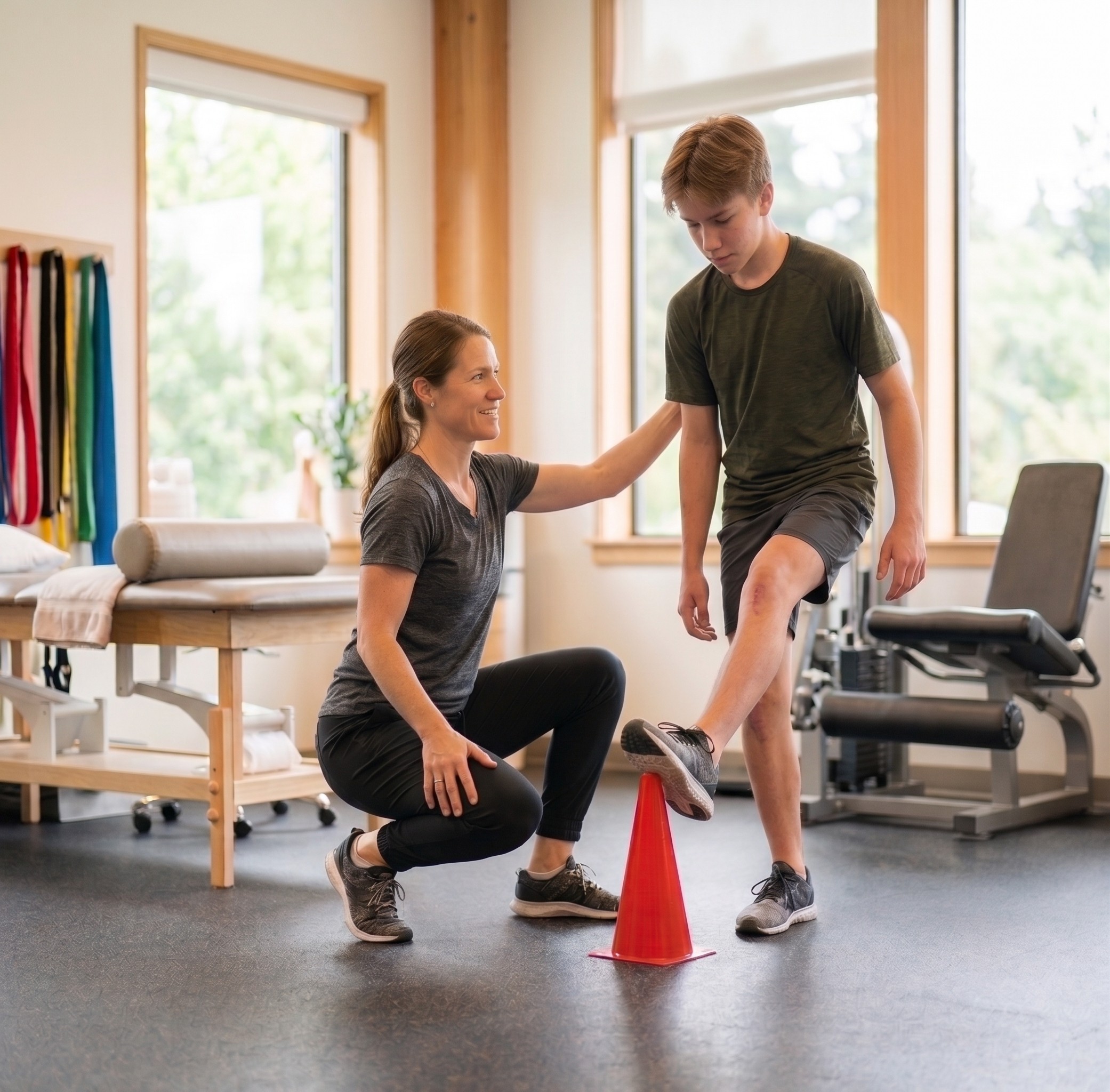
What New Knee Research Means for Patients in Hillsboro, Beaverton, Aloha, and Nearby Towns
Sep 6, 2026
By
Dr. Mike Makher

ACL Tear: Is Surgery Your Only Option, or Can Physical Therapy Alone Get You Back to Sport?
Aug 23, 2026
By
Dr. Mike Makher

ACL Recovery Guide for Hillsboro, OR
Aug 13, 2026
By
Dr. Mike Makher