
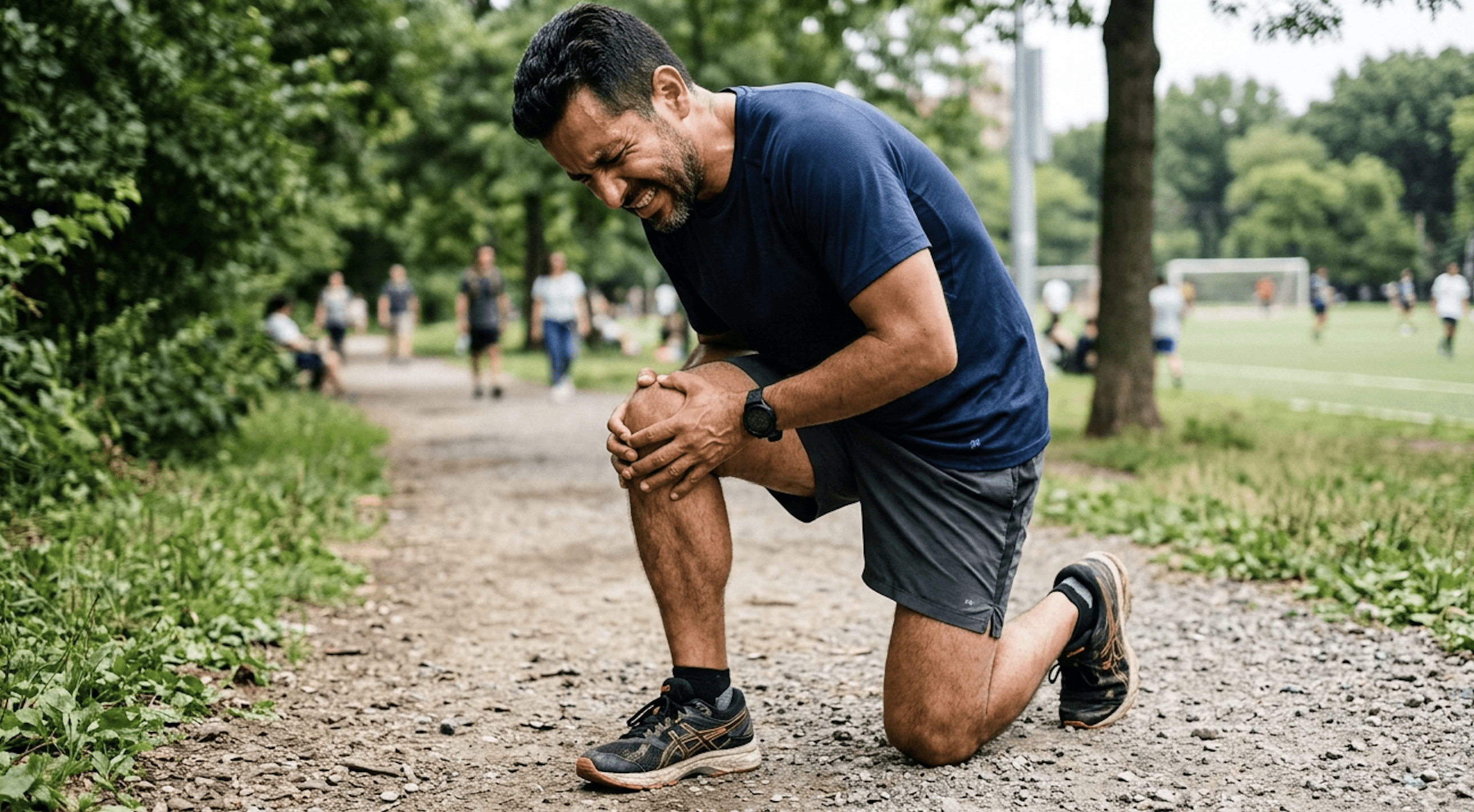
Knee Pain When Sitting Too Long? Patellofemoral Pain Treatment in Hillsboro, OR
By
Dr. Mike Makher
Struggling with knee pain when sitting or running? Learn evidence-based patellofemoral pain treatment in Hillsboro, OR based on current research.
Disclaimer: This article is for educational purposes only. It should not be seen as medical advice. Every case and person is unique, so treatment and prevention should be customized by a licensed professional.
Knee Pain That Follows You Through the Day
It often begins gradually with mild discomfort that shows up when you walk down the stairs, lingers when you squat, or becomes more noticeable after sitting for a long period at work before standing up again. This might feel like an unpredictable pattern yet it'll be strangely consistent across everyday movements.
This type of discomfort, is often associated with what is medically referred to as patellofemoral pain, and is one of the most frequent reasons people experience pain in the front of the knee. Despite how common it is, it often leaves people unsure about why it keeps returning and what actually helps.
A large body of research has been dedicated to understanding this condition; when experts reviewed over 300 studies, they found a clear trend in how this problem is approached, with most research focusing heavily on physical treatments, especially exercise, as the primary care solution.
This strong focus tells us something important about the nature of this condition, which is that how the body moves plays a central role in both the development of symptoms and the path toward improvement.
Understanding Where the Pain Comes From
Patellofemoral pain is felt around the proximity of the kneecap, which moves along a groove in the thigh bone as the knee bends/straightens. When this movement becomes sensitive or overloaded over time it can lead to irritation that shows up during common activities.
People often describe the pain as being in the front of the knee or behind the kneecap which tends to become more noticeable during tasks that involve bending and straightening the knee under load, such as climbing stairs, squatting, running, or even sitting for long periods before standing.
The research consistently shows that most studies measure two main outcomes when looking at this condition: pain levels and physical function (how well a person can move and perform daily activities).
These two areas, pain and function, become the central focus of both treatment and recovery, ultimately impacting care and how progress is measured over time.
Why the Pain Can Feel So Persistent
One of the most frustrating parts of patellofemoral pain is how it tends to come and go…sometimes improving for a period before coming back again when a person starts moving more or less, which can make it feel unpredictable and difficult to manage.
Most studies on this topic seem to focus on biomechanical factors: basically how the body moves, how joints align, and how muscles support the knee during activity, and while these factors are important, they do not represent the entire picture .
At the same time, the clinical practice guideline I'm referencing for this article highlights that other important areas such as emotional health, behavior patterns, activity habits, and overall load on the body are not studied as often. This is despite the fact that they likely play a meaningful role in how pain develops and persists .
This is a challenge for those dealing with the condition, since it is often treated primarily through physical means even though the experience of pain is influenced by multiple layers that extend beyond the joint itself.
What the Research Focuses On Most
When researchers mapped out the available evidence, they found that about 82 percent of studies focused on physical interventions, with therapeutic exercise being the most commonly studied approach by a large margin, while only a smaller portion of research explored non-physical approaches such as psychological or behavioral strategies .
In addition, most studies focused on outcomes related to pain and physical function, while other outcomes such as emotional well-being, sleep, and quality of life were rarely included, often appearing in less than 10 percent of studies .
This imbalance shows that while we know a great deal about how physical treatments affect pain and movement, there is still much to learn about how other factors contribute to recovery.
Why Exercise Plays Such a Central Role
Exercise stands at the center of treatment for patellofemoral pain because it directly influences how the body moves, adapts, and tolerates load, making it the most studied and most widely used intervention in the research .
Through consistent and structured movement, exercise helps improve muscle strength, enhance coordination, and support the joint in a way that allows it to handle everyday demands with less irritation.
As strength and control improve, the knee is often able to move more smoothly during activities like walking, squatting, and climbing stairs, which can lead to a gradual reduction in symptoms over time.
Strength, Control, and the Whole Leg
The knee does not function in isolation, and its performance is closely tied to the strength and coordination of the surrounding muscles, including those in the hip and lower leg, which work together to guide movement and absorb forces.
Exercise programs often focus on building strength in these areas while also improving control during functional tasks, helping the body distribute load more evenly and reducing stress on the kneecap.
These changes do not happen all at once, but with consistent effort, they can lead to meaningful improvements in both movement quality and overall comfort.
Movement Patterns Shape Knee Stress
The way a person moves has a direct impact on how forces are applied to the knee, and even small changes in movement patterns can influence how stress is distributed across the joint.
This includes how the knee tracks during a squat, how the body absorbs force when landing, and how the leg moves during walking or running, all of which contribute to the overall load placed on the kneecap.
Improving these patterns through practice and guided movement can help reduce irritation and support more efficient motion.
The Overlooked Role of Load
One of the key insights from the research is that load, meaning how much stress is placed on the knee over time, is an important factor that has not been studied as extensively as physical mechanics, even though it plays a major role in symptom changes .
Load includes how often you move, how intense the activity is, and how quickly those demands increase, and when these factors change too rapidly, the knee may become irritated.
This highlights the importance of managing activity levels in a way that allows the body to adapt gradually.
Progress Happens With Time and Consistency
The body responds best to steady and consistent input, and when activity levels increase in a controlled and gradual way, the knee has time to adapt without becoming overwhelmed.
This approach often involves starting with movements that feel manageable, then slowly increasing the difficulty or volume over time while allowing for recovery between sessions.
Consistency becomes more important than intensity, as small, repeated efforts build resilience in the joint and surrounding tissues.
Education Supports Long-Term Change
Understanding the condition and how it responds to activity helps people make better decisions about movement, pacing, and recovery, which can improve long-term outcomes.
Although education is included in some treatment approaches, it is not studied as often as exercise, even though it plays an important role in helping people stay engaged and confident in their progress .
Learning how to adjust activity levels, recognize patterns in symptoms, and respond appropriately can make a significant difference in how the condition is managed over time.
The Bigger Picture of Pain
Pain is influenced by more than just physical structures, and factors such as stress, previous experiences, and overall lifestyle can affect how it is felt and interpreted.
The research highlights that areas like emotional health and quality of life are not commonly studied, even though they are important parts of the overall experience of pain .
This suggests that a more complete approach to care would consider both physical and non-physical factors.
What This Means for Treatment Today
Even with gaps in the research, clear patterns emerge that guide treatment, with exercise, movement improvement, and gradual progression forming the foundation of care for patellofemoral pain.
At the same time, the limited attention given to non-physical factors suggests that future approaches may expand to include a broader range of strategies that address the full experience of the condition.
Looking Ahead
The research points toward a future where treatment becomes more comprehensive, including not only physical interventions but also psychological, behavioral, and lifestyle factors that influence recovery.
As more studies explore these areas, care can become more tailored to the individual, addressing both movement and the context in which that movement occurs.
Final Thoughts
Patellofemoral pain can affect daily life in subtle yet persistent ways which ends up influencing how people move, exercise, and engage with their routines. Ironically current research suggests that consistent and structured movement remains a central part of addressing the problem.
While much of the current evidence focuses on physical treatments, there is growing recognition that a broader perspective would help create more effective and lasting solutions in the future .
With the right approach built on: gradual progression, consistent movement, and a better understanding of the condition many people can return to the activities that matter most to them. If you want help with this type of issue, reach out to us at Pain & Performance Coach by calling us at (971)-364-0909 or emailing us at team@painperformancecoach.com.
Don’t Miss Out
Join our newsletter to get latest research insights.
References
Hart HF, Selkowitz DM, Nunes GS, et al. Bridging the gap: a systematic evidence and gap map of interventions for patellofemoral pain. J Orthop Sports Phys Ther Open. 2025;Issue in progress. https://www.researchgate.net/publication/396224436_Bridging_the_Gap_A_Systematic_Evidence_and_Gap_Map_of_Interventions_for_Patellofemoral_Pain
Struggling with knee pain when sitting or running? Learn evidence-based patellofemoral pain treatment in Hillsboro, OR based on current research.
What New Research on Achilles Tendon Recovery Means for Both of Your Legs
Sep 21, 2026
By
Dr. Mike Makher
What New Knee Research Means for Patients in Hillsboro, Beaverton, Aloha, and Nearby Towns
Sep 6, 2026
By
Dr. Mike Makher

ACL Tear: Is Surgery Your Only Option, or Can Physical Therapy Alone Get You Back to Sport?
Aug 23, 2026
By
Dr. Mike Makher