

Why Limb Symmetry Alone Isn’t Enough for ACL Recovery
By
Dr. Mike Makher
Clinics relying only on limb symmetry testing are under-equipped for ACL recovery. Learn why safe return to sport after ACL surgery requires more.
Disclaimer: This article is for educational purposes only. It should not be seen as medical advice. Every case and person is unique, so treatment and prevention should be customized by a licensed professional.
Introduction
For decades, the limb symmetry index (LSI) has been used as the gold standard for deciding when athletes are ready to return to sport after anterior cruciate ligament reconstruction (ACL-R). The idea is simple: if the injured leg performs at least 90% as well as the uninjured leg, the athlete is “cleared.”
But new research published in the British Journal of Sports Medicine calls this into question. The study found that LSI alone cannot reliably differentiate athletes who return to sport safely from those who go on to suffer another ACL injury. This has major implications for clinics that rely only on LSI testing: they may be under-equipped to guide patients through safe recovery.
The Limits of Limb Symmetry
The study analyzed 233 athletes (ages 15–30) from Project ACL, a Swedish rehabilitation registry. Each athlete underwent a test battery including quadriceps and hamstring strength, hop tests, and symmetry measures. Researchers then tracked outcomes over two years to see who reinjured their ACL.
Findings revealed:
Athletes with LSI scores ≥80% or ≥85% actually had lower odds of a safe return to sport, meaning they were more likely to get reinjured.
Achieving the commonly accepted 90% LSI cut-off did not predict safe outcomes.
Even a perfect 100% limb symmetry score offered no guarantee of protection from reinjury.
In short, limb symmetry does not equal readiness. Clinics that depend solely on it may give athletes false reassurance and clear them too early.
Why This Matters for Clinics
An ACL tear is one of the most devastating sports injuries, and the risk of a second tear is alarmingly high: 23–35% in athletes under 25. That means the margin for error is slim.
If a clinic only uses LSI testing, it misses critical factors like:
Absolute strength deficits that affect both legs, making symmetry misleading.
Movement quality and sport-specific demands that aren’t captured in hop or dynamometer tests.
Biological healing time, since athletes who returned later (average 14.6 months) had safer outcomes than those who returned earlier (12 months).
Psychological readiness, which plays a large role in preventing re-injury but isn’t reflected in symmetry numbers.
Without broader assessment tools, clinics risk discharging athletes who are still vulnerable.
The Future of ACL Testing
The authors emphasize that ACL rehabilitation must move beyond single snapshots of limb symmetry. Instead, a multifactorial approach is needed, combining:
Strength across full ranges of motion (not just peak torque aka force relative to bodyweight) [suggesting at least checking at multiple joint angles for torque].
Neuromuscular control and cognitive load testing to mimic the chaos of sport.
Patient-reported outcomes that capture fear, confidence, and readiness.
A careful consideration of time to return, respecting biological healing processes.
Clinics that don’t integrate these elements are under-equipped to provide the highest standard of ACL care. The sad reality is most clinics in Oregon don’t even have any way to measure torque.
In Hillsboro, OR besides Pain & Performance Coach’s VALD and Beyond Power Voltra technology (which includes the ability to measure the force across the full range, in one angle at a time, and during functional movements) there’s only one other clinic that publicizes they use any tools, an inexpensive crane scale which is essentially only able to measure force at one angle (not even necessarily peak torque). The comparison unfortunately isn’t even fair.
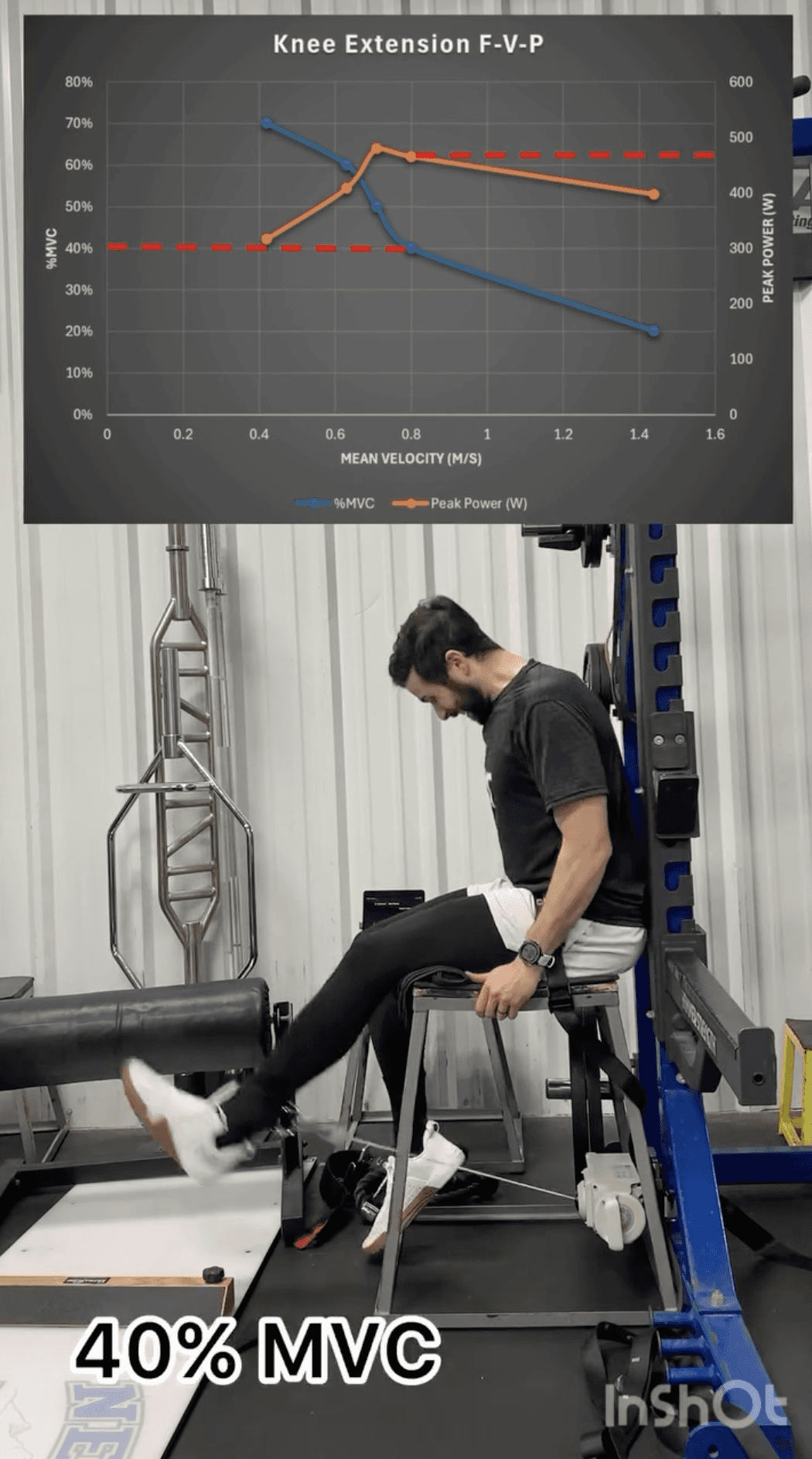
Example image of Beyond Power Voltra in use for isokinetic testing as demonstrated by Dr. Jason Tuori, DPT (at the time of Mana Performance Therapy in NY state, now Head Physical Therapist of Overtime Elite).
Full video found here: https://www.instagram.com/reel/DNib-IDNnKW/.
Conclusion
This research makes it clear: relying on limb symmetry alone is not enough to ensure a safe return to sport after ACL reconstruction. Clinics must adopt broader, more comprehensive testing strategies using higher quality more specific equipment if they want to protect athletes from the devastating cycle of repeat ACL injuries.
Citation
Simonsson R, Sundberg A, Piussi R, et al. Questioning the rules of engagement: a critical analysis of the use of limb symmetry index for safe return to sport after anterior cruciate ligament reconstruction. Br J Sports Med. 2025;59(6):376-384. doi:10.1136/bjsports-2024-108079
Don’t Miss Out
Join our newsletter to get latest research insights.
Clinics relying only on limb symmetry testing are under-equipped for ACL recovery. Learn why safe return to sport after ACL surgery requires more.
What New Knee Research Means for Patients in Hillsboro, Beaverton, Aloha, and Nearby Towns
Sep 6, 2026
By
Dr. Mike Makher

ACL Tear: Is Surgery Your Only Option, or Can Physical Therapy Alone Get You Back to Sport?
Aug 23, 2026
By
Dr. Mike Makher

ACL Recovery Guide for Hillsboro, OR
Aug 13, 2026
By
Dr. Mike Makher