Recovery, Management, and Long-Term Considerations After a Concussion
By
Dr. Mike Makher
Learn what concussion recovery really looks like, how to return to school, work, and sports safely, and when to seek more care in Hillsboro and the rest of Washington County.
Disclaimer: This article is for educational purposes only. It should not be seen as medical advice. Every case and person is unique, so treatment and prevention should be customized by a licensed professional.
What recovery really looks like for kids, teens, adults, and older adults in Washington County
After a concussion, most people want to know one thing.
“When will I be better?”
This is a fair question and also a hard one to answer.
Concussion recovery does not follow an exact calendar…there is no single rule that fits everyone.
This article explains what recovery usually looks like, why it can vary, and how people safely return to daily life after a concussion. It also explains what to do when symptoms last longer than expected.
What Recovery From a Concussion Really Means
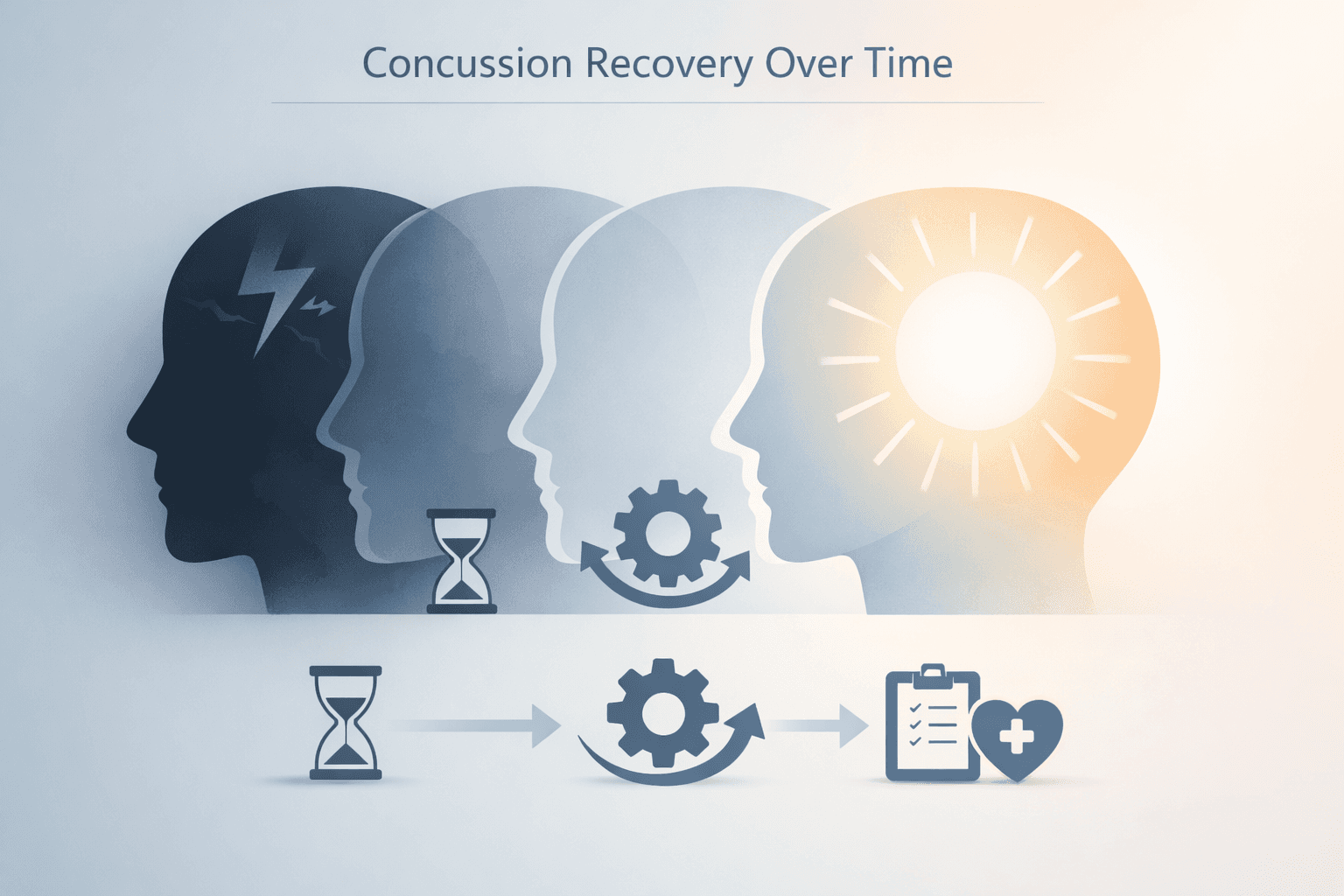
Recovery does not mean symptoms disappear all at once.
Recovery means:
Symptoms slowly become less intense
Symptoms happen less often
Daily activities become easier again
The brain handles stress better over time
Some days feel better and some feel worse.
This does not mean recovery is failing. It just means recovery doesn't happen in a straight upward line.
How Long Does Concussion Recovery Take?
Many people start to feel better within days or weeks.
Others take longer.
Clinical guidance is clear on one thing: recovery time varies.
It depends on:
How strong symptoms were at first
Past concussion history
Sleep quality
Stress levels
Mental health
Neck, balance, or vision involvement
Daily demands like school or work
There is no single “normal” timeline.
Why Recovery Can Feel Slow
After a concussion, the brain is working harder to do normal tasks.
Thinking takes more effort.
Balance takes more effort.
Vision takes more effort.
This extra effort causes symptoms.
As the brain recovers, it handles effort better. Symptoms fade.
Pushing too hard, too fast can overload the system and slow progress.
Early Management After a Concussion
Early care matters.
Modern guidance no longer supports long periods of complete rest.
Instead, early management focuses on relative rest.
What Relative Rest Means
Relative rest means:
Avoiding activities that strongly worsen symptoms
Avoiding risky activities that could cause another injury
Allowing light daily movement
It does not mean:
Staying in bed all day
Sitting in a dark room for days
Avoiding all activity
Too much rest can make symptoms worse.
Safe Early Activities
Early activities may include:
Light walking
Basic self-care
Calm social interaction
Short periods of reading or screen use, if tolerated
Symptoms may increase slightly. That can be okay.
Long-lasting or severe symptom spikes are not.
Gradual Return to Activity
Recovery works best when activity increases slowly.
This applies to:
School
Work
Exercise
Sports
Driving
Screens
The key rule is simple.
Activity is guided by symptoms.
Returning to School
For children and teens, school is often the biggest challenge.
Early return usually includes:
Short school days
Extra breaks
Reduced homework
Extra time for tests
Limited screen use
School demands increase as symptoms allow.
Waiting for symptoms to be completely gone before returning often causes more problems than it solves.
Returning to Work
Adults may return to work with changes.
This may include:
Shorter workdays
Lighter mental tasks
Fewer meetings
Reduced screen time
Flexible schedules
Work demands increase step by step.
Returning to Driving
Driving requires:
Fast reaction time
Clear vision
Focus
Balance
Some people feel fine driving quickly. Others do not.
Clinicians guide driving return based on:
Symptoms
Reaction speed
Visual comfort
Confidence
Driving too soon can increase risk.
Exercise During Recovery
Exercise is no longer forbidden after concussion.
Guidelines support early, light exercise when done carefully.
Examples include:
Walking
Stationary biking
Light aerobic activity
Exercise should:
Stay below symptom flare levels
Stop if symptoms worsen significantly
Be increased slowly
Exercise supports recovery when done correctly.
Returning to Sports
Sports return follows stages.
Each stage increases:
Speed
Impact
Complexity
A person must tolerate each stage before moving on.
Returning too early increases risk of:
Symptom worsening
Longer recovery
Repeat injury
Medical clearance is required before full return to contact sports.
Why Symptoms Sometimes Come Back
Symptoms may return when activity increases.
This does not mean damage is happening.
It means the brain is being asked to do more than it can handle yet.
The solution is:
Step back slightly
Let symptoms settle
Try again later
This back-and-forth is normal.
When Symptoms Last Longer Than Expected
Some people have symptoms that last weeks or months.
This is often called persistent post-concussion symptoms.
This does not mean the brain is permanently injured.
It often means specific systems need attention.
Common Contributors to Persistent Symptoms
Persistent symptoms may involve:
Balance systems
Vision systems
Neck problems
Headache patterns
Sleep problems
Mood or anxiety
These are treatable contributors.
What Post-Concussion Syndrome Really Means
Post-concussion syndrome does not mean:
Damage is worsening
The brain is broken
Recovery is impossible
It means symptoms have lasted longer than expected and need targeted care.
Cumulative Concussion Risk
Repeated concussions can increase recovery time.
Risk depends on:
Number of concussions
How close together they occurred
How fully recovery happened
Individual factors
This is not an all-or-nothing rule.
Decisions are individualized.
Prevention and Risk Reduction
Prevention focuses on reducing risk, not eliminating activity.
Helpful strategies include:
Following sport rules
Proper coaching
Safe technique
Protective equipment
Reporting symptoms early
Avoiding return while symptomatic
Early reporting reduces long-term risk.
Emotional Health During Recovery
Concussion recovery affects mood.
Feeling frustrated, worried, or sad is common.
These feelings do not mean recovery is failing.
Support, reassurance, and clear guidance help recovery.
Why Education Helps Recovery
Understanding concussion reduces fear.
Fear increases symptoms.
Clear education helps people:
Pace themselves
Avoid extremes
Trust the process
Education is a treatment tool.
Questions to Ask Your Clinician
What activities are safe for me right now?
Answers might look like: light daily activities and gentle movement are usually safe once serious injury is ruled out, as long as they do not cause a large or long-lasting increase in symptoms.
How will we know when to increase activity?
Based on the current evidence, your clinician might say the following: activity increases are guided by how symptoms respond during and after activity, with gradual progression allowed when symptoms stay stable or settle quickly.
What signs suggest I need additional care?
Clinical practice guidelines would currently suggest: symptoms that last longer than expected, interfere with school or work, or involve dizziness, neck pain, vision problems, or mood changes suggest the need for more targeted evaluation and care.
Frequently Asked Questions
Should I rest until all symptoms are gone?
No. Long periods of complete rest are no longer recommended.
Can exercise help recovery?
Yes. Light, controlled exercise often supports recovery.
Are long-term problems common?
Most people recover well, but early recognition and proper care matter.
Why This Matters for Washington County Residents
People in Washington County live active lives.
Kids play sports.
Adults commute and work.
Families bike, hike, and recreate.
Older adults experience falls.
Understanding recovery helps people:
Avoid fear
Avoid extremes
Recover more smoothly
How This Article Fits the Series
This article completes the concussion education series.
Earlier articles explained:
What a concussion is
How symptoms appear
How diagnosis works
Together, these articles form a clear, evidence-based guide for families and individuals in the Washington County and the West Metro Portland areas.
Don’t Miss Out
Join our newsletter to get latest research insights.
References
Department of Veterans Affairs, Department of Defense. VA/DoD clinical practice guideline for the management of concussion–mild traumatic brain injury. Version 2.0. Washington, DC: Department of Veterans Affairs, Department of Defense; 2016; Centers for Disease Control and Prevention. CDC guideline on the diagnosis and management of mild traumatic brain injury among children. JAMA. 2018;320(20):2069-2070; McCrory P, Meeuwisse W, Dvorak J, et al. Consensus statement on concussion in sport—the 5th International Conference on Concussion in Sport held in Berlin, October 2016. Br J Sports Med. 2017;51(11):838-847; Ontario Neurotrauma Foundation. Guideline for concussion/mild traumatic brain injury and persistent symptoms. 3rd ed. Toronto, ON: Ontario Neurotrauma Foundation; 2018; Leddy JJ, Haider MN, Ellis MJ, et al. Sport-related concussion. N Engl J Med. 2025;392(5):483-493.
Learn what concussion recovery really looks like, how to return to school, work, and sports safely, and when to seek more care in Hillsboro and the rest of Washington County.