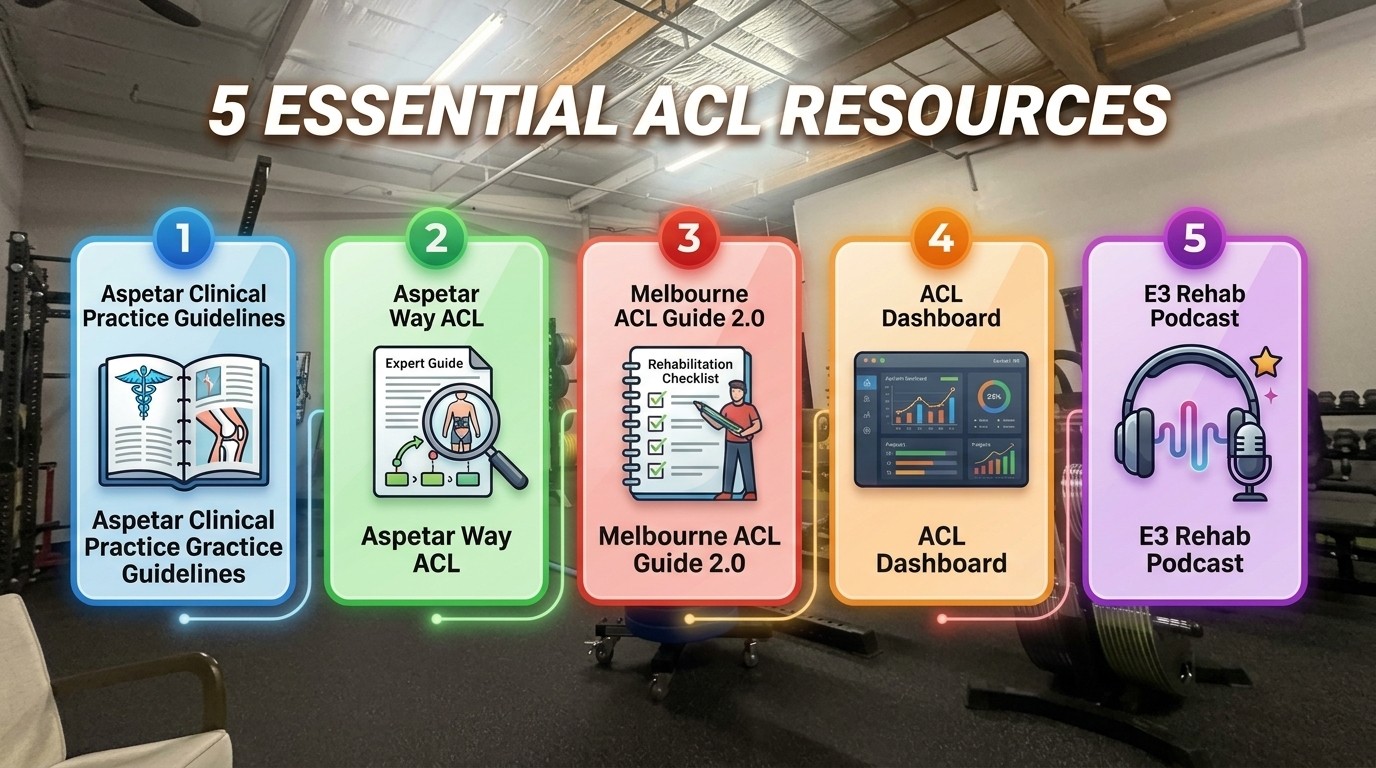

Revision ACL Surgery: What a Study of 469 Sports Surgeons Means for Your Knee Recovery in Hillsboro, Beaverton and Washington County
By
Dr. Mike Makher
A 2025 study of 469 sports surgeons shows how they handle second ACL surgeries. What it means for knee rehab in Hillsboro and the rest of Washington county.
Disclaimer: This article is for educational purposes only. It should not be seen as medical advice. Every case and person is unique, so treatment and prevention should be customized by a licensed professional.
Revision ACL Surgery: What a Study of 469 Sports Surgeons Means for Your Knee Recovery in Hillsboro, Beaverton and Washington County
Educational Disclaimer
This article is for general education only. It is not medical advice and does not replace a visit with your doctor, surgeon or physical therapist. Every knee and every surgery is different, so talk with your own care team before making choices about surgery, exercise or return to sport. Reading this article does not create a patient and provider relationship with Pain & Performance Coach Physical Therapy.
Maya was 17 when her knee gave out the first time. She planted her foot on a wet soccer field in Forest Grove, turned to chase the ball and felt a pop. Surgery rebuilt her torn ACL. She stuck with physical therapy and was back on the field the next fall.
Two years later, during a pickup game in Beaverton, it happened again. Same knee. Same pop.

Maya is not a real patient, but her story is familiar to physical therapists in Hillsboro, Aloha, Bethany and across Washington County. A second ACL tear brings a fresh set of worries. Will surgery work this time? What will the surgeon do differently? How long until life feels normal again?
A 2025 study in The Orthopaedic Journal of Sports Medicine gives a clear look at how sports surgeons across the United States handle second ACL surgeries.¹ It shows where surgeons agree, where they split and where physical therapy fits in.
The short answer: In a survey of 469 sports surgeons, 70% said they add extra support to the outside of the knee during some second ACL surgeries. Of those, 80% prefer a method called LET. The most popular new graft was the patellar tendon (47%). Surgeons still disagree on who needs what, which makes a steady rehab plan even more important.
What Is Revision ACL Surgery?
Your ACL, or anterior cruciate ligament, is a strong band inside your knee. It connects your thigh bone to your shin bone. Its main job is to keep your shin from sliding forward or twisting too far when you cut, jump or land.
When the ACL tears, a surgeon often replaces it with new tissue called a graft. That first operation is an ACL reconstruction. About 120,000 of these surgeries happen in the United States each year.
Sometimes the new graft fails. The study reports failure rates from about 3% to as high as 27%, depending on the patient group. When a graft fails, the next step is often a second operation called a revision ACL reconstruction.
Revisions are harder than first surgeries. Compared with people after a first ACL surgery, revision patients tend to have a looser knee afterward, a higher chance of another injury and a lower chance of getting back to their sport. That gap is why surgeons keep looking for ways to make revisions work better.
What Did the Study Look At?
Researchers from the University of Kansas Medical Center and The Steadman Clinic in Vail, Colorado, emailed a survey to 3,262 members of the American Orthopaedic Society for Sports Medicine (AOSSM). AOSSM is a national group for sports medicine surgeons.
In all, 469 surgeons answered, a 14% response rate. Most were men (90%), and almost all (95%) had extra fellowship training in sports medicine. Private practice was the most common work setting, followed by academic, or teaching, hospitals.
The survey asked surgeons three main questions about revision ACL surgery:
Which graft do you prefer?
Do you add extra support on the outside of the knee?
If so, which method do you use, and for which patients?
Keep one point in mind. This study measured what surgeons choose, not how patients did afterward. It shows habits and trends. It does not prove which choice works best.
Which Graft Do Surgeons Choose for a Second ACL Surgery?
A graft is the tissue a surgeon uses to build the new ACL. An autograft comes from your own body. An allograft comes from a donor.
The top pick in the study was the patellar tendon autograft, chosen by 47% of surgeons. It uses the middle strip of the tendon just below your kneecap, with a small plug of bone on each end. The authors note this graft has a low link to graft failure and infection, which helps explain why so many surgeons trust it for a second try.
The second most common choice was the quadriceps tendon autograft (22%), taken from the thick tendon just above the kneecap. Hamstring autografts and donor allografts were each chosen by about 9% of surgeons.
Training and experience shaped these choices. Graft picks varied by fellowship training, years in practice and type of practice. Still, the patellar tendon stayed the top pick in every practice setting and at every experience level.
What it means for rehab: Each autograft leaves a donor site that needs to heal. A patellar tendon graft can make kneeling sore for a while. A quadriceps graft can slow early thigh strength gains. A hamstring graft can leave the back of the thigh weaker at first. Your physical therapist adjusts your exercises to protect the spot where your graft came from.
What Is LET, and Why Do Surgeons Add It?
Picture a tent. The center pole holds it up. On a windy day, though, the tent can still twist unless you tie ropes to the sides.
Your knee works in a similar way. The ACL is the center pole. Along the outside of the knee sits a group of tissues called the anterolateral complex. Like the side ropes on a tent, these tissues help stop the shin bone from twisting too far when you pivot or change direction.
During a revision, many surgeons now add extra support to this outer area. The study calls it anterolateral complex augmentation, which means adding strength to the outer front part of the knee. Surgeons do it in one of two main ways:
Lateral extra-articular tenodesis (LET): The surgeon takes a thin strip of the iliotibial band, the long, tough band on the outside of your thigh, and anchors it to the thigh bone so it acts like a side rope.
Anterolateral ligament reconstruction (ALL): The surgeon uses a graft to rebuild a small ligament on the outer front of the knee.
[Insert the knee illustration here. See the In-Article Image section below.]
In the survey:
70% of surgeons perform this extra outside support in revision ACL surgery.
80% of those surgeons prefer LET over ALL.
Newer surgeons, with 0 to 5 years in practice, used it most, at 88%.
Surgeons at academic hospitals came close behind, at 87%.
Newer surgeons and teaching hospitals often pick up fresh research early. Their high use of LET may hint at where revision ACL care is heading.
Who Gets the Extra Support?
Surgeons in the study most often added outside support for patients with:
More than one failed ACL surgery (52%)
One failed ACL surgery (37%)
Contact sports, like football or soccer (17%)
The two methods tended to go to different patients. Surgeons more often chose LET for contact athletes. They more often chose ALL for patients with a body mass index (BMI) over 35.
The authors also list known risk factors for an ACL graft failing:
Being female
Being younger
Having a higher BMI
Playing pivoting sports
Having a looser knee before surgery
Having a steep slope at the top of the shin bone, over 12 degrees
Not sticking with rehab
You can't change your age or the shape of your bones. You can control how you show up for rehab, and that is where a physical therapist makes a real difference.
Do All Surgeons Agree?
No. In the authors' words, revision ACL practices "vary widely, with no uniform consensus on graft choice and indications for ALC augmentation." In plain terms, surgeons do not agree on the best graft or on who needs the extra outside support.
Research is still catching up. A large 2020 trial called STABILITY found that adding LET lowered graft failure in young, active people having their first ACL surgery with a hamstring graft.² Fewer studies look at second surgeries. Some of them found no clear difference in knee stability, how patients rated their knees or failure rates when surgeons added LET or ALL to a revision.
The study has limits, and the authors share them openly:
Only 14% of the surgeons who got the survey answered it.
Surgeons active in research or teaching may have been more likely to reply.
Answers came from memory, which can be off.
The survey also went out in early 2022, so some habits may have changed since.
So there is no single right surgery for every second ACL tear. Your surgeon weighs your history, your body and your goals. That puts more weight on two things you control: asking good questions and sticking with your rehab.
What This Means for Your Rehab After a Second ACL Surgery
Rehab after a revision looks a lot like rehab after a first ACL surgery, with a few key differences. The plan often moves more slowly, and it follows your surgeon's protocol.
If your surgeon adds an LET or ALL, you also have new healing tissue on the outside of your knee. Some surgeons set early limits on bending, bracing or certain exercises to protect it. Your physical therapist follows those limits and stays in touch with your surgeon's office as you progress.
Rehab can even start before surgery. Many surgeons want the knee calm, fully straight and strong enough before a revision. A few weeks of "prehab" can help you go into surgery in better shape.
After surgery, a typical revision rehab plan builds in stages:
Calm the knee. Control swelling and pain so your muscles can switch back on.
Get the knee straight. A fully straight knee early on helps you walk normally.
Wake up the quadriceps. The big front thigh muscle often shuts down after surgery. Rebuilding it is one of the biggest keys to success.
Strengthen hips and core. Strong hips help keep the knee from caving inward when you land or cut.
Train balance and control. Single leg balance and movement drills teach the knee to react fast.
Add running, jumping and cutting. These return step by step, only when your strength and control are ready.
Test before you return to sport. Strength and hop tests show when your knee is ready, instead of going by the calendar alone.
Remember that risk factor from the study: inconsistent rehab. Skipping visits, stopping early or rushing back can put a new graft at risk. Showing up and doing the work gives your second surgery its best chance.
Questions to Ask Your Surgeon Before Revision ACL Surgery
Bring these questions to your next visit:
Which graft will you use, and why is it right for me?
Will you add an LET or ALL? Why or why not?
Does the slope of my shin bone or my leg alignment play a role?
Will this be a one step or two step surgery?
Write down the answers and share them with your physical therapist as this will help inform their plan of action for you.
Revision ACL Rehab Near You in Hillsboro, Aloha, Beaverton, Cornelius, North Plains, Forest Grove and Bethany
Washington County is full of people who love to move. You might play club soccer in Beaverton, bike around Hagg Lake near Forest Grove, chase your kids around the park in Aloha or play pickleball in Bethany. You might spend long days on your feet in Hillsboro, Cornelius or North Plains. A knee that keeps giving way takes all of that off the table.
If you face a revision ACL surgery, or you have already had one, our physical therapists can help. We follow a plan tailored to you, track your strength with testing along the way and build your program around the activities you want back. You can get focused ACL rehab close to home, without the drive into Portland.
Ready to talk about your knee? Call Pain & Performance Coach Physical Therapy at 971-364-0909 to schedule an evaluation.
Frequently Asked Questions About Revision ACL Surgery
How long is recovery after revision ACL surgery?
Recovery after a revision often takes longer than after a first ACL surgery. Many people need 9 to 12 months or more before they return to cutting and pivoting sports. Your graft, any added procedures and your strength test results all shape the timeline. Your surgeon and physical therapist set the pace together.
What is LET in ACL surgery?
LET stands for lateral extra-articular tenodesis. The surgeon uses a thin strip of the iliotibial band from the outside of the thigh to add support on the outer side of the knee. It helps limit twisting. In a 2025 survey, 80% of surgeons who add this kind of support preferred LET.¹
Is a second ACL surgery as successful as the first?
On average, revision results trail first surgery results. Revision patients tend to have more knee looseness, more reinjuries and lower return to sport rates.¹ Many people still do well, especially with a clear surgical plan and steady physical therapy.
What graft is best for revision ACL surgery?
No single graft is best for everyone. In the 2025 survey, 47% of sports surgeons preferred a patellar tendon autograft and 22% preferred a quadriceps tendon autograft.¹ Your surgeon considers your past grafts, your sport and your body when choosing.
Should I do physical therapy before revision ACL surgery?
Many surgeons want the knee calm, fully straight and strong enough before a revision. Prehab with a physical therapist can help you reach those goals and can make the first weeks after surgery easier. You can even go ahead and ask your surgeon whether prehab fits your plan.
Where can I get ACL rehab in Hillsboro, Beaverton or Forest Grove?
Pain & Performance Coach Physical Therapy provides physical therapy after first and revision ACL surgeries for patients from Hillsboro, Aloha, Beaverton, Cornelius, North Plains, Forest Grove and Bethany. Call 971-364-0909 to schedule an evaluation.
Educational Disclaimer
This article is for general education only. It is not medical advice and does not replace a visit with your doctor, surgeon or physical therapist. Every knee and every surgery is different, so talk with your own care team before making choices about surgery, exercise or return to sport. Reading this article does not create a patient and provider relationship with Pain & Performance Coach Physical Therapy.
References
Bartkoski M, Coda R, Mar D, et al. Current trends and indications for extra-articular reconstruction in revision ACL reconstruction: a cross-sectional study. Orthop J Sports Med. 2025;13(11):23259671251386878. doi:10.1177/23259671251386878
Getgood AMJ, Bryant DM, Litchfield R, et al. Lateral extra-articular tenodesis reduces failure of hamstring tendon autograft anterior cruciate ligament reconstruction: 2-year outcomes from the STABILITY study randomized clinical trial. Am J Sports Med. 2020;48(2):285-297. doi:10.1177/0363546519896333
Don’t Miss Out
Join our newsletter to get latest research insights.
References
Bartkoski M, Coda R, Mar D, et al. Current trends and indications for extra-articular reconstruction in revision ACL reconstruction: a cross-sectional study. Orthop J Sports Med. 2025;13(11):23259671251386878. doi:10.1177/23259671251386878 Getgood AMJ, Bryant DM, Litchfield R, et al. Lateral extra-articular tenodesis reduces failure of hamstring tendon autograft anterior cruciate ligament reconstruction: 2-year outcomes from the STABILITY study randomized clinical trial. Am J Sports Med. 2020;48(2):285-297. doi:10.1177/0363546519896333
A 2025 study of 469 sports surgeons shows how they handle second ACL surgeries. What it means for knee rehab in Hillsboro and the rest of Washington county.